








Amrutha Lahari Kolluru
The human race, the anthropocene, has deeply integrated itself into every system while moulding itself into a better one. Governance and legal systems, economic and market systems, infrastructural and technological systems, socio-cultural systems, ecological and natural systems have always influenced each other too. However, they are bound by ecological limits or the greater concept of limits to growth that restrain the resources, driving scarcity to reform a global transition.
In fact, according to Multi-Level Perspective (MLP) theory in sustainability transitions, macro-level landscape pressures such as critical resource scarcity and climate degradation destabilise existing socio-technical regimes, forcing policy, market, and infrastructural systems to realign (Geels, 2002; Geels, 2011). More explicitly, resource scarcity drives global reform across couples human-natural systems. This is necessitated by a shift from technological substitutions to collective self-limitation and structural reorganisation across societal, legal, and economic systems. (Brand et al., 2021)
This theoretical need for realignment and reorganisation is now becoming a global priority. To operationalise these systemic transitions on a planetary scale, multilateral institutions are establishing dedicated frameworks to accelerate the shift away from car-centric paradigms.
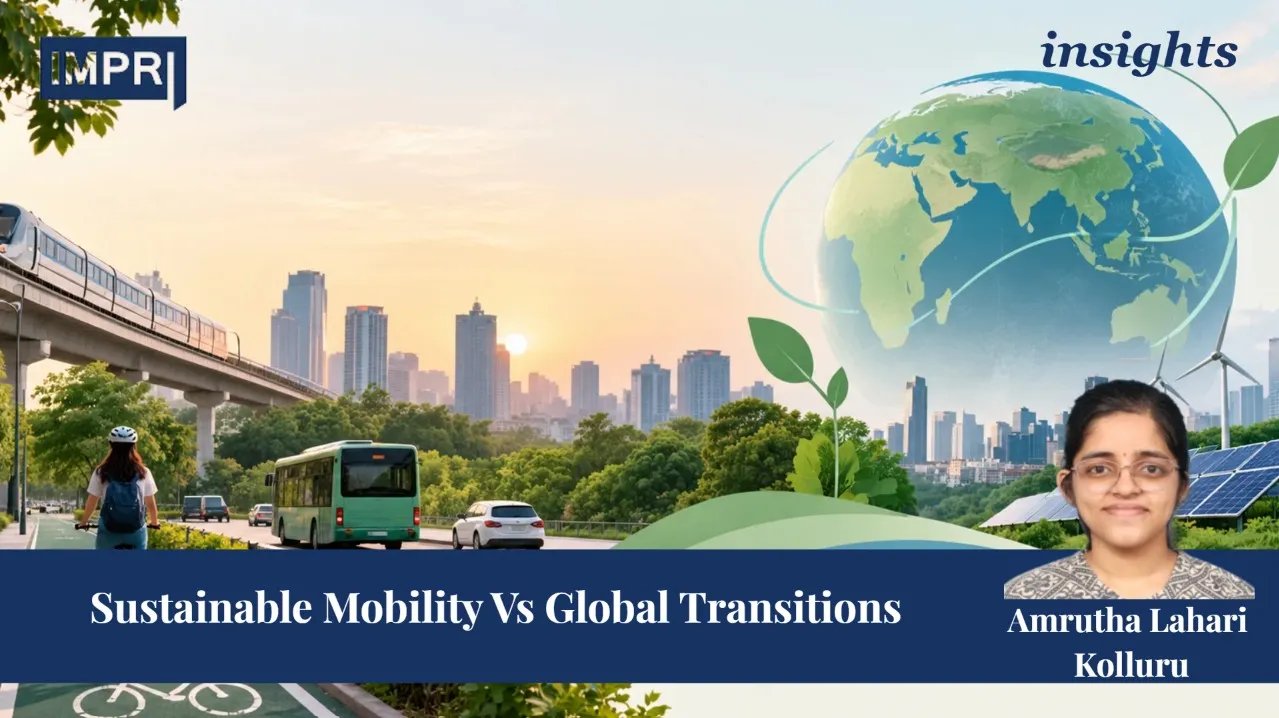
The global action of the UN declaring 2026- 2035 as the decade of Sustainable Transport, serves as a critical macro-level intervention, raising awareness of transport’s role in achieving the SDGs while forcing a structural response to a multi-dimensional crisis. This decade is an opportunity to further raise awareness of transport’s crucial role in supporting the SDGs, its great impact on carbon emissions and to address new solutions to the multi-dimensional problem.
This urgency is justified by the IPCC’s Sixth Assessment Report, which highlights that, direct greenhouse gas (GHG) emissions from the transport sector were 8.7 GtCO2-eq in 2019 (up from 5.0 GtCO2-eq in 1990) and accounted for 23% of global energy-related CO2 emissions (IPCC, 2022). At the regime level, the transport system remains bound to a carbon-intensive status quo through structural lock-ins across car-centric infrastructure, distorted economic incentives, legacy systems and fractured governance.
To break through these entrenched regime level bottlenecks, urban mobility must pivot from soft guidelines toward legally enforceable, integrated policy frameworks such as Karnataka’s mobility bill. Stemming from the National Urban Transport Policy introduced in 2014, by the Ministry of Housing and Urban Affairs (MoHUA), the bill grants statutory, legal enforceable rights to pedestrians and cyclists. It forces urban local bodies to construct connected footpaths, protect non-motorised transport infrastructure budgets, and embed active mobility into city master plans. Along with the Directorate of Urban Land Transport (DULT) 2014 Guidelines for Planning & Implementation of Pedestrian Infrastructure, the national policy imbibes a soft governance or provides statutory authority in cities, which continue to prioritise flyovers and car lanes over pedestrian safety.
It is thus important to note that true mobility transition isn’t just about hardware. It is also about legislative software like policies, statutory rights, funding mandates etc. However, systemic transitions require integrated and dynamic solutions that encompass various sectoral issues like spatial constraints, resource/ grid stress and fragmented institutional networks. Prioritising active mobility and Transit Oriented Development (TOD) over vehicle volume, integrating shared electric transit with renewable grids rather than mass private EV ownership, integrating and unifying transport authorities to bridge siloed urban planning agencies, improving first and last mile connectivity and promoting battery swapping and charging methods can help aid the transitions.
While these dynamic solutions offer a clear roadmap, under the existing global constraints, they can remain as ideations and vastly diverge from implementation. Bridging this gap requires expanding the mobility ecosystem beyond simple technological substitution toward systemic restructuring, combining active mobility, integrated mass transit and legally enforceable frameworks. To operationalise this shift, research on exploring the transitional bottlenecks and quantifications of the spatial, financial and regulatory policy levers can draw a visionary guideline into a functional urban reality.
References
Geels, F. W. (2011). The multi-level perspective on sustainability transitions: Responses to seven criticisms. Environmental Innovation and Societal Transitions, 1(1), 24–40.
Brand, U., Muraca, B., Pineault, É., Sahakian, M., Schaffartzik, A., Novy, A., … & Alier, J. M. (2021). From planetary to societal boundaries: an argument for collectively defined self-limitation. Sustainability: Science, Practice and Policy, 17(1), 264–291. https://doi.org/10.1080/15487733.2021.1940754
PCC. (2022). Transport. In Climate Change 2022: Mitigation of Climate Change. Contribution of Working Group III to the Sixth Assessment Report of the Intergovernmental Panel on Climate Change (Chapter 10). Cambridge University Press. https://www.ipcc.ch/report/ar6/wg3/chapter/chapter-10/
National Policy Anchor: Ministry of Housing and Urban Affairs (MoHUA), Government of India. National Urban Transport Policy (NUTP), 2014.
Karnataka Active Mobility Framework: Directorate of Urban Land Transport (DULT), Government of Karnataka. Draft Active Mobility Bill & Guidelines for Planning and Implementation of Pedestrian Infrastructure (2014).
Governance & Spatial Integration: Karnataka Urban Land Transport / BMLTA Frameworks for Transit-Oriented Development (TOD) & Mobility Action Plans.
Global Decarbonization Mandates: UN General Assembly Resolutions on Sustainable Transport & Global Plan for the Decade of Action for Road Safety.
About the Contributor: Amrutha Lahari Kolluru is a postgraduate in M.A. Environmental Economics from the Madras School of Economics. She is currently an Associate Consultant at Core CarbonX Pvt. Ltd. and a Research and Editorial Intern at IMPRI. Her interests include environmental economics, climate policy, carbon markets, sustainability, and quantitative policy research.
Disclaimer: All views expressed in the article belong solely to the author and not necessarily to the organisation
Read more at IMPRI:
A Spatial Perspective on Unauthorised Colonies in Delhi.
National Programme on Energy Storage (2021): Strengthening India’s Clean Energy Transition
Acknowledgement: This article was posted by Tanisha Hooda, a Research and Editorial Intern at IMPRI.