






Policy Update
Paridhi Passi
Background
India’s tribal communities have faced a paradox that has defined development policy for decades. They are among the most constitutionally protected groups in the country, yet consistently among the most underserved. According to the 2011 Census, Scheduled Tribes constitute 8.6% of India’s population, with over 36,428 villages across the country having at least 50% tribal population and 500 or more ST residents. These villages, scattered across remote forests, hill ranges, and geographically isolated interiors, have remained on the periphery of India’s development gains despite repeated policy attention.
The primary financial instrument for tribal infrastructure development for decades was the Special Central Assistance to Tribal Sub-Scheme (SCA to TSS). While it channelled funds to states with notified Scheduled Tribe populations, its design lacked outcome orientation, convergence with other Central schemes, and village-level planning. Funds were released with broad mandates and little accountability for what got built, where, and for whom. The result was uneven implementation, persistent infrastructure deficits, and a widening gap between tribal villages and national averages across health, education, sanitation, and road connectivity.
In response to these accumulated failures, the Government of India revamped SCA to TSS as Pradhan Mantri Adi Adarsh Gram Yojana (PMAAGY), to be implemented during 2021-22 to 2025-26. The scheme carries the vision of transforming villages with significant tribal populations into model villages, called Adarsh Grams, with saturated basic services and adequate infrastructure through convergence of government schemes. Administered by the Ministry of Tribal Affairs and 100% centrally funded, PMAAGY marks a decisive shift from passive fund transfer to active, village-level, gap-filling infrastructure development.
Table 1: PMAAGY at a Glance
| Parameter | Details |
| Nodal Ministry | Ministry of Tribal Affairs |
| Revamped From | SCA to Tribal Sub-Scheme (SCA to TSS) |
| Implementation Period | 2021-22 to 2025-26 |
| Villages Targeted | 36,428 villages |
| Eligibility | 500+ ST residents and 50%+ ST population |
| Target Population | 4.22 crore tribal citizens |
| Per Village Grant | Rs. 20.38 lakh (gap-filling funds) |
| Sectors Covered | 8 key infrastructure sectors |
| Funding Pattern | 100% Central Government funded |
| Integration | One of 25 interventions under DAJGUA |
Objectives
The central aim of PMAAGY is integrated socio-economic development of tribal-majority villages through a convergence approach, ensuring that where flagship Central and State schemes have left gaps, dedicated gap-filling funds and village-level planning close them.
The first objective is infrastructure saturation across eight critical sectors: roads, drinking water, electricity, health sub-centres, schools, Anganwadi centres, telecom connectivity, and drainage and solid waste management. The second is Village Development Planning: every selected village must prepare a Village Development Plan (VDP) based on a baseline infrastructure assessment, transforming tribal development from a top-down fund transfer into a locally grounded, needs-based exercise. The third is convergence maximisation: PMAAGY converges with 58 Central and State schemes carrying Scheduled Tribe Components, deploying the Rs. 20.38 lakh gap-filling grant only for what existing schemes have not covered. An Adarsh Gram is defined as one where all essential services are accessible and minimum needs of every section of the community are fully met.
Functioning
PMAAGY operates through a clearly defined planning-to-execution chain. State Governments identify eligible villages, facilitate VDP preparation, and oversee project execution at the block and district level. The process begins with a village-level infrastructure assessment across the eight priority sectors. A VDP is then prepared and approved by the District Level Coordination Committee (DLCC), which certifies convergence with ongoing schemes before gap-filling funds are released.
Table 2: PMAAGY Implementation Framework — Current vs Suggested
| Stage | Current Framework | Suggested Framework |
| 1. Village identification | State government identifies eligible villages | Same, with mandatory baseline data submission |
| 2. Infrastructure assessment | Assessment across 8 priority sectors | Assessment indexed to village size and sector gaps |
| 3. Village Development Plan | Prepared at village level | Gram Sabha formally validates VDP before submission |
| 4. DLCC approval | Certifies convergence with schemes | Time-bound approval with mandatory meeting schedules and accountability for delays |
| 5. Fund release | Flat Rs. 20.38 lakh per village | Indexed grant based on village size and number of gap sectors |
| 6. Execution | Block and district level oversight | Capacity-building for district officials; social audits mandatory |
| 7. Monitoring | Progress tracked via PMAAGY portal | Third-party assessment before Adarsh Gram status is awarded |
The Rs. 20.38 lakh per village grant is expressly additive, deployed only for interventions that existing flagship schemes have not yet covered. Progress is monitored through the PMAAGY portal, which tracks infrastructure assessments, VDP generation, works completed, and beneficiaries covered across all participating states and UTs.
Importantly, PMAAGY has been expanded and subsumed under the Dharti Aaba Janjatiya Gram Utkarsh Abhiyan (DAJGUA), launched in October 2024 with an outlay of Rs. 79,156 crore over five years. This integration positions PMAAGY as one of 25 targeted interventions within DAJGUA’s multi-ministry saturation framework, giving it significantly greater institutional and financial backing than it had as a standalone scheme.
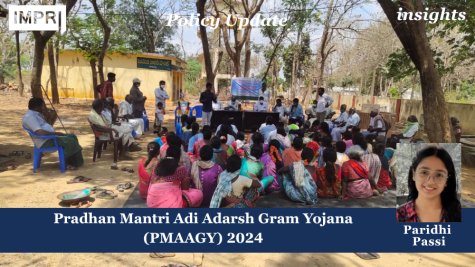
Figure 1: Declaration of Pradhan Mantri Adarsh Gram at Rangamati Gram Panchayat, Amarpur R.D. Block, Tripura (August 5, 2022), in the presence of MLA Sri Ranjit Das.
Source: PMAAGY Photo Gallery, Ministry of Tribal Affairs, Government of India.
Budget and Fiscal Commitment
The Union Budget 2025-26 reflected a decisive escalation in commitment to PMAAGY. The allocation rose from Rs. 127.51 crore in 2024-25 to Rs. 335.97 crore in 2025-26, a 163% increase in a single year, signalling intent to accelerate implementation in the scheme’s final phase.
However, this fiscal acceleration stands in contrast to the coverage gap on the ground. With over 20,000 villages, more than 56% of the 36,428 targeted, yet to receive sanctioned programmes as of March 2024, the budget surge must translate into proportionally faster village coverage to justify the scale of investment
This sits within a broader pattern of expanded tribal welfare spending, with the overall Ministry of Tribal Affairs budget rising 45.79% from Rs. 10,237.33 crore to Rs. 14,925.81 crore, and a cumulative 231.83% increase since 2014-15.
Table 3: Tribal Welfare Budget Allocations, 2025-26
| Scheme | 2024-25 (Rs. crore) | 2025-26 (Rs. crore) | Change |
| PMAAGY | 127.51 | 335.97 | +163% |
| DAJGUA | 500.00 | 2,000.00 | +300% |
| PM-JANMAN | 150.00 | 300.00 | +100% |
| Eklavya Model Residential Schools | 4,748.00 | 7,088.60 | +49% |
| PM Janjatiya Vikas Mission | 152.00 | 380.00 | +150% |
| Ministry of Tribal Affairs (Total) | 10,237.33 | 14,925.81 | +46% |
Source: Union Budget 2025-26, Ministry of Finance, Government of India
Progress So Far
Development programmes were sanctioned in 15,989 villages with a disbursement of Rs. 2,283.31 crore by the end of March 2024. Of the 36,428 targeted villages, roughly 44% had received sanctioned programmes within the first three years. While meaningful, this pace leaves over 20,000 villages still to be addressed. The scheme’s integration into DAJGUA from October 2024 has introduced renewed momentum, with saturation camps and DLCC-led convergence exercises providing a more structured pathway for VDP approval and project execution. Implementation momentum, however, varies across states:
Table 4: State-wise Implementation Status under DAJGUA
| State | Status under DAJGUA |
| Jharkhand | Active focus state; DLCC-led convergence underway |
| Odisha | Active focus state; saturation camps being conducted |
| Madhya Pradesh | Active focus state; structured VDP approval pathway in progress |
| Chhattisgarh | Active focus state; convergence exercises ongoing |
The slow pace in the first three years reflects structural bottlenecks rather than lack of intent, delays in VDP preparation, inter-departmental coordination failures at the district level, and inconsistent convergence quality across states. The concentration of renewed momentum in Jharkhand, Odisha, Madhya Pradesh, and Chhattisgarh is itself telling; these states have the highest tribal populations but also among the weakest sub-district administrative capacity, making them simultaneously the most critical and the hardest to deliver in.
Emerging Issues
The progress achieved under PMAAGY is real, but several challenges deserve honest scrutiny.
The most pressing is the slow pace of VDP preparation and approval. The DLCC approval process demands inter-departmental coordination that many district administrations struggle to sustain, creating a structural bottleneck that delays fund release even where village-level assessments are complete.
The per-village grant of Rs. 20.38 lakh is also a limitation. The gap-filling design principle is sound, but the quantum is modest for villages with deficits across multiple sectors simultaneously. Convergence quality varies significantly across states, and villages in weaker-capacity states tend to receive less complete interventions as a result.
The Parliamentary Standing Committee on Social Justice and Empowerment, in its report presented to the Lok Sabha in 2023, flagged PMAAGY’s slow pace, pointing to delays in VDP generation, incomplete infrastructure assessments, and under-utilisation of sanctioned funds in several states. These are not isolated concerns but reflect a deeper challenge: administrative capacity at the sub-district level remains the binding constraint in tribal welfare delivery.
Finally, absorption into DAJGUA, while beneficial, risks diluting PMAAGY’s identity as a village-planning-centred programme. If DAJGUA’s saturation approach prioritises rapid beneficiary coverage over quality, community-informed VDPs, the scheme’s core strength could be compromised in the rush to meet targets.
Suggestions
Reforms needed under PMAAGY vary in urgency and feasibility and should be sequenced accordingly.
High Priority (Immediate): A time-bound VDP approval mechanism with mandatory DLCC meeting schedules must be institutionalised, with clear accountability for delays. Gram Sabhas should formally validate VDPs before funds are released, moving beyond token consultation. Capacity-building programmes for district officials responsible for VDP preparation should be launched immediately to address the sub-district bottlenecks that are currently the scheme’s binding constraint.
Medium Priority (Ongoing): The per-village grant of Rs. 20.38 lakh should be indexed to village size and the number of sectors with identified gaps, replacing the flat uniform amount. Social audits involving Gram Sabhas and tribal community representatives should be made mandatory at key implementation stages, ensuring accountability flows downward to communities rather than remaining confined to departmental reporting.
Long-Term Reform: Independent third-party assessments should be mandated before Adarsh Gram status is awarded, ensuring the designation reflects ground reality. As PMAAGY operates within DAJGUA, safeguards must be built in to ensure saturation targets do not come at the cost of quality, community-informed village planning — the scheme’s core strength.
Conclusion
PMAAGY represents one of the more thoughtfully designed instruments in India’s tribal welfare architecture. Its insistence on village-level planning, baseline gap identification, and convergence before expenditure distinguishes it from the blunt fund-transfer approach of its predecessor. The 163% budget increase in 2025-26 and integration into DAJGUA provide the scheme with the strongest institutional and financial backing it has had since inception. Whether that translates into genuine transformation depends entirely on implementation quality. Becoming an Adarsh Gram must mean something on the ground, not merely a designation awarded when paperwork is complete. Tribal communities deserve model villages in reality, not just in government records.
References
Ministry of Tribal Affairs, Government of India. (2021). Pradhan Mantri Adi Adarsh Gram Yojana: Scheme guidelines. https://twd.tripura.gov.in/sites/default/files/Revised.pdf
Press Information Bureau, Government of India. (2022). Pradhan Mantri Adi Adarsh Gram Yojna aims at transforming villages with significant tribal population into model village. https://www.pib.gov.in/Pressreleaseshare.aspx?PRID=1882862
Press Information Bureau, Government of India. (2025). Empowering tribes towards Viksit Bharat: A historic boost for tribal welfare in Union Budget 2025. https://www.pib.gov.in/PressReleasePage.aspx?PRID=2098853
Business Standard. (2025, February 1). Budget 2025: Centre boosts tribal ministry funding by 45%. https://www.business-standard.com/budget/news/budget-2025-centre-boosts-tribal-ministry-funding-by-45-focus-on-infra-125020101162_1.html
DD News. (2025). Tribal development accelerates with 200% rise in budget over a decade. https://ddnews.gov.in/en/tribal-development-accelerates-with-200-rise-in-budget-over-a-decade/
Ministry of Finance, Government of India. (2025). Union Budget 2025-26: Expenditure budget. https://www.indiabudget.gov.in
Ministry of Tribal Affairs, Government of India. (n.d.). PMAAGY dashboard. https://pmagy.gov.in
About the Contributor
Paridhi Passi is a Research and Editorial Intern at IMPRI and a Political Science (Hons.) student at Daulat Ram College, University of Delhi. Her academic interests lie in public policy and governance.
Acknowledgement
The author extends sincere thanks to the IMPRI team for their guidance.
Disclaimer: All views expressed in the article belong solely to the author and not necessarily to the organization.
Reviewer’s name: Vyomini Nathwani & Ameya Satam
Disclaimer:
All views expressed in the article belong solely to the author and not necessarily to the organisation.