


Policy Update
Debjani Chatterjee
Background
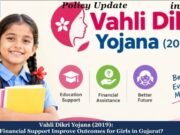
Gujarat introduced the Vahli Dikri Yojana on 2 August 2019 to address concerns about the status of girls and their access to education. The state had faced challenges related to an unfavourable child sex ratio, gender discrimination and early marriage. Census 2011 recorded Gujarat’s child sex ratio at 890 girls (0-6 years of age group) per 1,000 boys, below the national figure of 919. The government introduced this scheme to encourage families to value their daughters and support their future. It provides financial assistance at different stages of a girl’s life, including school entry and adulthood. The main aim is to improve girls’ education, reduce school dropouts and discourage child marriage.
Functioning
1. Financial Assistance: The Gujarat government provides financial support to eligible girls under Vahli Dikri Yojana, launched in 2019, to improve their future opportunities and reduce the financial burden on families.
2. Support at Different Stages: The scheme provides assistance at three stages. Eligible girls receive ₹4,000 when they enter Class 1, ₹6,000 when they enter Class 9, and ₹1,00,000 when they reach 18 years of age, subject to scheme conditions.
| Eligibility condition | Official scheme information |
| Family income | Annual combined parental income of ₹2 lakh or less |
| Eligible birth date | Girl born on or after 2 August 2019 |
| Maternal age | Mother must be at least 18 years old at the time of birth |
| Eligible children | All eligible daughters among the first three children, subject to scheme conditions |
| Application deadline | Application within one year of the girl’s birth |
Source: Government of Gujarat, Women and Child Development Department.
3. Education and Empowerment: The financial assistance encourages families to continue their daughters’ education and helps reduce the risk of school dropouts.
4. Gender Equality: The scheme aims to challenge son preference and improve the social status of girls by recognising their value within the family.
5. Prevention of Early Marriage: The assistance available at age 18 may encourage families to support girls until adulthood and consider further education or other opportunities.
6. Long Term Impact: The scheme seeks to promote girls’ education, financial security and independence.
| Stage | Financial assistance | Main purpose |
| Admission to Class 1 | ₹4,000 | Support initial schooling |
| Admission to Class 9 | ₹6,000 | Support continuation into secondary education |
| At age 18 | ₹1,00,000 | Support higher education or other permitted purposes, subject to scheme conditions |
Source: Government of Gujarat, Women and Child Development Department
Performance
1. Financial Commitment by the Government: The Government of Gujarat has reported budget figures of ₹150.35 crore for 2023–24, ₹252.34 crore for 2024–25 and ₹216.50 crore for 2025–26 for the Vahli Dikri Yojana. However, these figures need to be verified against the respective years’ official budget documents to establish whether they represent Budget Estimates, Revised Estimates or Actual Expenditure. Budget provisions show the funds planned or allocated for a scheme, but they do not confirm how much was actually spent or how many girls received assistance. A clear assessment of the scheme’s financial performance therefore requires verified year wise budget estimates, revised estimates, actual expenditure and beneficiary data.
2. Support for Education: The scheme provides ₹4,000 when an eligible girl enters Class 1 and ₹6,000 when she enters Class 9. This staged assistance can help families manage education related expenses and encourage girls to continue schooling. However, the government information reviewed does not establish how many beneficiaries remained in school because of the scheme.
3. Support for Girls at Adulthood: Eligible girls can receive ₹1 lakh at the age of 18 for higher education or marriage assistance, subject to the scheme’s conditions, including the prohibition of child marriage. This provision aims to improve financial security and encourage families to invest in girls’ futures. Its actual impact on higher education enrolment requires beneficiary level evidence.
4. Administrative Outreach: The Gujarat Women and Child Development Department’s Tejaswini report records 2,483 beneficiaries associated with the distribution of sanction orders under Vahli Dikri Yojana. However, the district and reporting period for this activity could not be independently verified from the available information. The figure should therefore be treated as evidence of a specific implementation activity rather than the scheme’s total reach across Gujarat. To assess administrative outreach more accurately, the department should publish annual district wise and statewide data on applications received, beneficiaries approved, payments completed and pending cases. Such reporting would help identify regional gaps in implementation and establish how widely the scheme reaches eligible girls.
5. Focus on Social Change: The department identifies increasing the birth rate of girls, reducing school dropouts and preventing child marriage as key objectives. The scheme therefore addresses educational and social concerns alongside household financial constraints. Nevertheless, these objectives need to be assessed using separate indicators rather than assuming that financial assistance automatically produces social change.
6. Limitations in Measuring Performance: The available official documents provide information on financial allocations, eligibility rules and some implementation activities. However, the evidence reviewed does not provide a complete, comparable annual series of total beneficiaries, actual expenditure, school retention rates or child marriage outcomes attributable to the scheme. Therefore, its long term effectiveness cannot be conclusively measured from these figures alone.
Vahli Dikri Yojana represents a sustained state investment in girls’ education and financial security. Its staged payments offer support at important points in a girl’s life. To establish whether the scheme has improved outcomes, the government would need to publish annual beneficiary totals, payment completion rates, education continuation data and child marriage indicators. Comparing these indicators before and after implementation would provide a stronger basis for evaluating its actual impact.
Impact
1. Girls’ Education: The Vahli Dikri Yojana provides financial assistance at important educational stages, including entry into Classes 1 and 9, helping families manage education related expenses. According to Gujarat’s Samagra Shiksha Project Approval Board report, the transition rate from upper primary to secondary education changed from 88.5% in 2019–20 to 87.9% in 2020–21. Among girls, the rate increased from 83.26% to 85.4% during the same period. These figures indicate changes in girls’ educational progression, but they do not establish that the Vahli Dikri Yojana caused the improvement. Other factors, such as school infrastructure, scholarships, dropout prevention initiatives, parental awareness and household economic conditions, may also have contributed. Therefore, the scheme’s specific impact on girls’ education cannot be determined from these transition rates alone.
2. Child Marriage: One objective of Vahli Dikri Yojana is to discourage child marriage by providing financial assistance when eligible girls reach adulthood. According to Gujarat’s National Family Health Survey fact sheets, the percentage of women aged 20 to 24 who had married before age 18 declined from 16.6% in NFHS 4 (2015–16) to 14.2% in NFHS 5 (2019–21) (International Institute for Population Sciences [IIPS] & Ministry of Health and Family Welfare [MoHFW], 2017, 2021). This decline indicates a reduction in early marriage at the state level. However, it cannot be attributed to Vahli Dikri Yojana alone, as other government initiatives, educational opportunities and social changes may also have contributed.
3. Gender Equality: The scheme recognises girls as deserving of financial investment and support. By linking assistance to different stages of a girl’s life, it encourages families to consider education and future opportunities alongside immediate household needs. However, direct changes in gender preferences require evidence from household surveys and beneficiary studies.
4. Financial Security: The assistance of ₹4,000, ₹6,000 and ₹1 lakh at specified stages can help eligible families meet education related expenses and plan for their daughters’ futures. The benefits are particularly relevant to families whose annual income does not exceed ₹2 lakh.
5. Long Term Impact and Limitations: The scheme has the potential to support higher education, financial independence and delayed marriage. However, official data linking individual beneficiaries to educational attainment, employment and marriage outcomes are necessary to verify these effects.
Vahli Dikri Yojana addresses financial and social barriers faced by girls. Its long term impact should be assessed through beneficiary records, school continuation rates and age at marriage, rather than relying solely on financial assistance provided.
Emerging Issues
1. Limited Educational Continuity: Although Vahli Dikri Yojana provides financial assistance at important educational stages, keeping girls in school remains a challenge. According to Gujarat’s Samagra Shiksha data, the Gender Parity Index was 0.85 at the secondary level and 0.92 at the higher secondary level. This indicates that gender gaps in educational participation require continued attention alongside financial support.
2. Dropout Among Adolescent Girls: The transition from primary education to higher classes does not guarantee that girls will complete secondary education. The Ministry of Education’s UDISE Plus data provide state and gender specific dropout statistics, highlighting the need to examine whether scheme beneficiaries continue their education after receiving assistance.
3. Income Eligibility Restrictions: The Vahli Dikri Yojana sets a combined annual family income limit of ₹2 lakh. Official guidelines cover all daughters among the first three living children, with an exception for multiple girls born during the second or third delivery. However, families earning slightly above the income limit may remain excluded despite facing financial difficulties (Women and Child Development Department, Government of Gujarat).
4. Child Marriage Remains a Concern: The National Family Health Survey 5 reported that 14.2% of women aged 20 to 24 in Gujarat had married before age 18. This shows that early marriage remains a relevant policy concern. Financial assistance alone may not address social expectations, poverty, safety concerns and limited educational opportunities that contribute to early marriage.
5. Accessibility and Application Barriers: Applicants need documents such as birth certificates, income certificates, residence proof and bank account details. Applications are submitted through designated government offices, including Anganwadi centres and local administrative offices. Families with limited awareness, documentation difficulties or poor access to these offices may need additional assistance to complete the process.
6. Delayed Financial Benefits: The largest payment becomes available at age 18, subject to eligibility conditions. This means families may need to meet education related expenses for several years before receiving substantial support. Timely processing of earlier instalments is therefore important.
7. Insufficient Outcome Tracking: Publicly accessible information does not provide a complete annual series connecting beneficiaries with school completion, higher education, employment and age at marriage. Without such data, it is difficult to determine the scheme’s direct impact or identify which groups benefit most.
8. Need for Broader Support: Financial assistance should be complemented by career guidance, school counselling, awareness campaigns and community engagement. Combining economic support with educational and social interventions could help address the multiple barriers faced by girls in Gujarat.
| Gujrat’s Girls Educational Indicator | Official state figure |
| Gender Parity Index at elementary level | 0.99 |
| Gender Parity Index at secondary level | 0.85 |
| Gender Parity Index at higher secondary level | 0.92 |
| Transition rate from primary to upper primary | 94.93% |
| Transition rate from upper primary to secondary | 78.08% |
| Dropout rate at elementary level | 5.21% |
| Dropout rate at secondary level | 9.45% |
| Dropout rate at higher secondary level | 2.50% |
Source: Samagra Shiksha Gujarat, Gender and Social Inclusion
Way Forward
1. Improve Beneficiary Tracking: The Gujarat Women and Child Development Department should maintain a simple digital record of every registered girl under Vahli Dikri Yojana. It should record applications received, approvals, payments made and pending cases. Annual district wise reports would help officials identify implementation gaps and improve accountability.
2. Ensure Timely Payments: The government should set clear timelines for processing each instalment and inform families about application status through SMS. Anganwadi workers should help families resolve missing documents, incorrect bank details and other common problems. A simple grievance system would make it easier to report delayed payments.
3. Strengthen Educational Support: Financial assistance should be linked with practical support for continuing education. Schools can identify girls at risk of dropping out and refer them for counselling, scholarships and transport assistance where available. Coordination between the Women and Child Development Department and the Education Department would help girls continue their studies beyond Class 9.
4. Improve Awareness and Accessibility: The government should organise awareness sessions through Anganwadi centres, schools and Gram Panchayats. Information should be provided in simple Gujarati, explaining eligibility, required documents, payment stages and application procedures. Special assistance should be available to families in remote areas who face difficulties accessing government offices.
5. Address Child Marriage Through Community Action: Local authorities, schools and Anganwadi workers should work with parents and community leaders to raise awareness about the legal marriage age and the importance of girls’ education. At risk girls should be connected with appropriate educational and protection services instead of relying on financial incentives alone.
6. Review Eligibility and Exclusion: The government should periodically examine whether the income limit of ₹2 lakh and the restriction generally covering the first two girl children exclude families facing serious financial difficulties. Any revision should be based on beneficiary data, fiscal capacity and a transparent review of unmet needs.
7. Measure Actual Outcomes: The department should publish an annual performance report covering beneficiary numbers, expenditure, payment completion, school continuation and age at marriage. A sample survey of beneficiary families could identify implementation problems and assess whether support is reaching intended girls. These findings should guide future improvements and budget decisions.
| Area | Indicator to publish annually | Responsible department |
| Application access | Applications received and approved | Women and Child Development |
| Payment delivery | Payments completed and pending by instalment | Women and Child Development |
| Education | Beneficiaries continuing into Classes 9 and 10 | Education Department |
| Child marriage | Age at marriage among surveyed beneficiary households | Women and Child Development and relevant local authorities |
| Inclusion | Beneficiaries by district and eligible social groups | Women and Child Development |
| Grievance redressal | Complaints received and resolved | Scheme implementing authorities |
References and Links
1. Government of Gujarat, Commissionerate of Women and Child Development. (2023, January 31). Vahali Dikari Scheme. https://wcd.gujarat.gov.in/initiativedetails?id=232
2. Government of Gujarat, Commissionerate of Women and Child Development. (n.d.). Vahali Dikri Scheme. https://wcd.gujarat.gov.in/posts?id=303
3. International Institute for Population Sciences, & Ministry of Health and Family Welfare. (2021). National Family Health Survey (NFHS-5), India, 2019–21: Gujarat. Government of India. https://www.mohfw.gov.in/sites/default/files/NFHS-5_Phase-I.pdf
4. Ministry of Statistics and Programme Implementation. (2024). Percentage of women aged 20–24 years married before age 18 years as per NFHS-5 (2019–21). Government of India. https://mospi.gov.in/percentage-women-aged-20-24-years-married-age-18-years-nfhs-5-2019-21-0
5. NITI Aayog. (2021). National Multidimensional Poverty Index: Baseline report. Government of India. https://www.niti.gov.in/node/542
6. Office of the Registrar General and Census Commissioner, India. (2011). Census of India 2011: Primary census abstract. Ministry of Home Affairs, Government of India. https://censusindia.gov.in/census.website/
7. Ministry of Education. (2022). Samagra Shiksha: Gujarat perspective plan, 2022–23. Government of India. https://dsel.education.gov.in/sites/default/files/2022-06/pab_gujarat_2223.pdf
8. Ministry of Education. (n.d.). UDISE+ reports and educational statistics. Government of India. https://www.education.gov.in/hi/statistics-new
About the Contributor
Debjani Chatterjee is a policy researcher with a background in Finance and Political science. Her work focuses on leveraging data analytics to support evidence based policy research.
Acknowledgement
My sincere thanks to the Impact and Policy Research Institute (IMPRI) for the opportunity to prepare this policy update article. IMPRI’s dedication to connecting research with actionable policy practice provides an invaluable platform for learning.
Reviewers
Khushi and Anamika P K
Disclaimer
The opinions expressed in this article are strictly those of the author and do not reflect the official position or views of the organization.