






Gaury
Background and Introduction
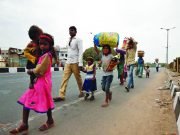
They switch the lights on before sunrise. Long before the market registers productivity, women — especially lower-class women — do the invisible work that makes that productivity possible: raising children, preparing food, cleaning, nursing, walking miles for water, looking after elderly relatives, and often working for wages in other people’s homes. These daily acts of care and maintenance do not sit at the margins; they reproduce the very labor-power the formal economy depends on (Federici, 2012; Himmelweit, 2002). From a feminist-Marxist angle, this is not auxiliary: it is foundational.
Capitalism is structurally dependent on unpaid and underpaid reproductive labor — yet persistently devalues and obscures it (Federici, 2012). As Feminism for the 99% argues, the struggle for women’s liberation cannot be separated from the struggle to transform this economic model (Fraser & Arruzza, 2019). As Fine and Saad-Filho (2010) explain, ‘Capital, as self-expanding value, is essentially the process of reproducing value and producing new value. The circuit of capital describes this motion’ (p. 46). This motion presupposes the ongoing, largely invisible reproduction of labor-power itself.
While Marx divided the capitalist economy into Department 1 (means of production) and Department 2 (means of consumption), a feminist perspective reveals an unacknowledged Department 0: the sphere of social reproduction (Bakker, 2007; Dalla Costa & James, 1972). Here, women and gendered labors produce and reproduce the very labor-power that Department 1 relies on — not just biologically but through the daily, unpaid, and underpaid work of child rearing, household maintenance, and community care. Without this labor, the entire edifice of production collapses.
If social reproduction constitutes a hidden ‘Department 0’ of the economy, then lower-class women are its deepest foundation — the sub-basement on which the entire edifice rests. They simultaneously sustain their own households through unpaid labor, work for wages outside the home under exploitative conditions, and also perform the reproductive and care labor that allows middle- and upper-class households to function. In this sense, they are not only reproducing labor-power for the capitalist economy but also subsidizing the social reproduction of more privileged classes (Dalla Costa & James, 1972; Himmelweit, 2002; Fraser & Arruzza, 2019).
This blog presents preliminary, intersectional insights into the hidden sub-basement of the economy. In collaboration with IMPRI, it highlights women’s daily realities, showing how unpaid and underpaid labor sustains households and local economies while revealing gaps in policy, entrenched gender norms, and class inequalities.
Ongoing qualitative fieldwork with working-class men and women in Uttarakhand reveals women beginning their days at 4 a.m., performing household chores for their own families before moving on to paid work in multiple homes, often subsisting on tea and biscuits. As one participant noted, ‘Every household can only work when there is someone working for the household.’ Another observed that women ‘have a much more difficult life than any man,’ reflecting the dual burden of waged and unpaid labor.
Patriarchal norms persist despite recognition of women’s work. One participant suggested women should ‘stick to household work’ to avoid their husbands experiencing ‘Bezati’ (insult), while another asked, ‘Who will give it?’ when prompted to imagine paid domestic work. These insights underscore how women’s labor remains largely invisible and normalized, even within working-class communities.
Preliminary Findings and Insights
The interviews reveal how unpaid and underpaid labor sustains not only individual households but the wider local economy. Participants underscored this reality from different vantage points. One woman who works in multiple households explained, ‘Every household can only work when there is someone working for the household.’ Her day begins at 4 a.m., preparing food and sending children to school, then traveling to several homes for waged labor, before returning to unpaid chores. This double burden exposes the invisible backbone of social reproduction that underpins paid economic activity (Fine & Saad-Filho, 2010).
Despite decades-old policies, participants generally had little knowledge of the Equal Remuneration Act (1976) or the Mahatma Gandhi National Rural Employment Guarantee Act (MGNREGA), which one participant even referred to as ‘Naringa.’ Some explained that people in their area receive about ₹6,000 per month under it, but they themselves do not participate. Others stated bluntly that they ‘didn’t know about any government schemes as such.’ This ignorance is not individual failure but structural: National Family Health Survey (NFHS-5) data show that only about 20–25% of women in Uttarakhand receive cash wages despite high participation in informal work, and nearly 49% lack control over their own earnings (Ministry of Health and Family Welfare [MoHFW], 2021).
When asked about state-supported services such as communal kitchens, women’s cooperatives, and expanded childcare, participants responded enthusiastically. One remarked these measures ‘would be right… It would be better. The work will get easier, and it would be better for both the men and women in the family and for the whole family.’ Their reactions reflect an appetite for collective infrastructure that could alleviate time poverty, improve nutrition, and enable more dignified participation in paid work. This is particularly urgent in Dehradun, where only about 21% of workers are women despite a female literacy rate of 85.8% (MoHFW, 2021).
The interviews also exposed entrenched gender norms and wage disparities. Some participants maintained that men deserve higher pay because they ‘do more effort demanding tasks,’ while others compared their lower earnings to their husbands’ and remarked, ‘It is fine only.’ Yet there was also support for maternity benefits: ‘If they’re doing proper work, why shouldn’t they get money when they’re in crisis?’ This ambivalence shows how patriarchal assumptions coexist with an emerging recognition that the current system is unsustainable (Press Information Bureau [PIB], 2024).
Taken together, these insights show that unpaid and underpaid work is the glue holding households and local economies together; that gaps in policy knowledge and implementation leave women exposed to precarity; and that ideas such as communal kitchens, paid leave, and cooperatives resonate strongly on the ground. By centering these voices, the blog highlights how any future intervention must address both the economic structures and the gender norms that make women’s labor simultaneously indispensable and invisible (Fine & Saad-Filho, 2010; MoHFW, 2021; PIB, 2024; National Health Mission [NHM], 2023).
Objectives
The objective of this research is to identify and evaluate the multifaceted contributions of women’s labor and its inherent value. A central component of this analysis is to understand the varied perceptions of women’s work, ranging from agricultural and waged labor to unpaid domestic and subsistence activities.
This includes exploring how women themselves, as well as society, employers, and communities,
perceive and assign value to this labor, and how these perceptions subsequently shape women’s opportunities, social status, well-being, and daily lives.
Additionally, the research will critically examine existing policy and collective strategies. It will assess the effectiveness of legal frameworks and programs — such as the Equal Remuneration Act and MGNREGA — in acknowledging and remunerating women’s labor. The study will also investigate how women’s informal networks and collective action can be leveraged to strengthen their recognition, bargaining power, and influence in policy advocacy.
An intersectionality framework will be applied to ensure the inclusion of women from diverse social locations, including lower-class agricultural and wage workers, single and married women, upper-class professionals, and trans and gender-diverse individuals. This approach will specifically focus on those who bear the disproportionate burden of invisible labor.
Finally, the study will highlight the economic ‘base’ that is constituted by women’s labor. It will argue that the unpaid and underpaid work of women, particularly those from lower socioeconomic backgrounds, serves as the metaphorical foundation of Uttarakhand’s economy. This perspective seeks to make visible the foundational labor that sustains households, communities, and broader markets.
Way Forward
Empowering Women Through Collective Action
We must strengthen local collective action. Women’s cooperatives and self-help groups (SHGs) are powerful, but they need greater support to move beyond financial literacy into real micro-enterprise development. Integrating these groups with government schemes like MGNREGA is crucial. Women’s participation in MGNREGA in Uttarakhand has increased to 58.1% by FY 2024–25 (PIB, 2024), highlighting the potential of state programs to engage and empower women. Yet, NFHS-5 data show that only 20–25% of women receive regular cash wages, and nearly 49% of women lack control over their own earnings (MoHFW, 2021), indicating persistent economic disempowerment and the need for better implementation.
Strengthening Infrastructure
Basic infrastructure such as communal kitchens, crèches, and Anganwadi centers must be expanded.
Uttarakhand has over 20,000 Anganwadi centers, but only 48% of children aged 3–6 use them (MoHFW, 2021), showing their limited reach. Crèches and community kitchens run by SHGs can reduce women’s time poverty, improve nutrition, and enable dignified participation in paid work. NFHS-5 and state-level data also suggest that supportive services are underutilized, highlighting the importance of flexible hours, meal facilities, and safe spaces (NHM, 2023).
Addressing Social Norms and Policy
The issue is not just lack of facilities but deep-seated gender norms. NFHS-5 shows a significant proportion of women still lack control over their own money and decision-making power (MoHFW, 2021), emphasizing structural disempowerment. Policy reforms must be paired with education and community engagement: gender-sensitive school curricula, men’s participation in domestic work, and public campaigns can help redistribute unpaid labor and build political support for recognizing women’s work as the foundational economic base of Uttarakhand.
A Final Call to Action
The findings of this study make one thing clear: the unpaid and underpaid labor of women, especially those in the lower classes, forms the hidden base of Uttarakhand’s economy — the sub-foundations upon which all visible economic activity rests. This is not about celebrating the success of a few, but about lifting up the many.
As the feminist movement has so powerfully declared, ‘Feminism for the 99% is not a movement to break the glass ceiling but to dismantle the entire building.’
This research is our first step toward that dismantling. It is a call to action to not only recognize women’s work, but to fundamentally reconstruct our economic and social systems so that the foundations of our society are finally made visible, valued, and justly compensated.
References
- Bakker, I. (2007). Social reproduction and the constitution of a gendered political economy. New Political Economy, 12(4), 541–556. https://doi.org/10.1080/13563460701661598
- Dalla Costa, M., & James, S. (1972). The power of women and the subversion of the community. Falling Wall Press.Federici, S. (2012). Revolution at point zero: Housework, reproduction, and feminist struggle. PM Press.
- Fine, B., & Saad-Filho, A. (2010). Marx’s capital and capitalism today. Pluto Press.
- Fraser, N., & Arruzza, C. (2019). Feminism for the 99%: A manifesto. Verso.
- National Health Mission, Government of India. (2023). Status of Anganwadi centres and childcare infrastructure in Uttarakhand. https://nhsrcindia.org
About the Contributor: Gaury is a recent Liberal Arts graduate with a multidisciplinary foundation in Psychology, Political Science, and Philosophy, I am an emerging social activist and political writer dedicated to systemic change. My academic journey has shaped a deep understanding of how individual behavior, political structures, and ethical frameworks intersect—and how these intersections must be challenged to advance equity and justice.
Disclaimer: All views expressed in the article belong solely to the author and not necessarily to the organisation.
Acknowledgement: This article was posted by Aashvee Prisha, a research intern at IMPRI.
Read more at IMPRI:
Department of Biotechnology (DBT) Outreach Programme: Promoting Excellence since 2010