






Policy Update
Ravirala Lahari
Background
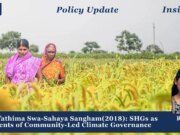
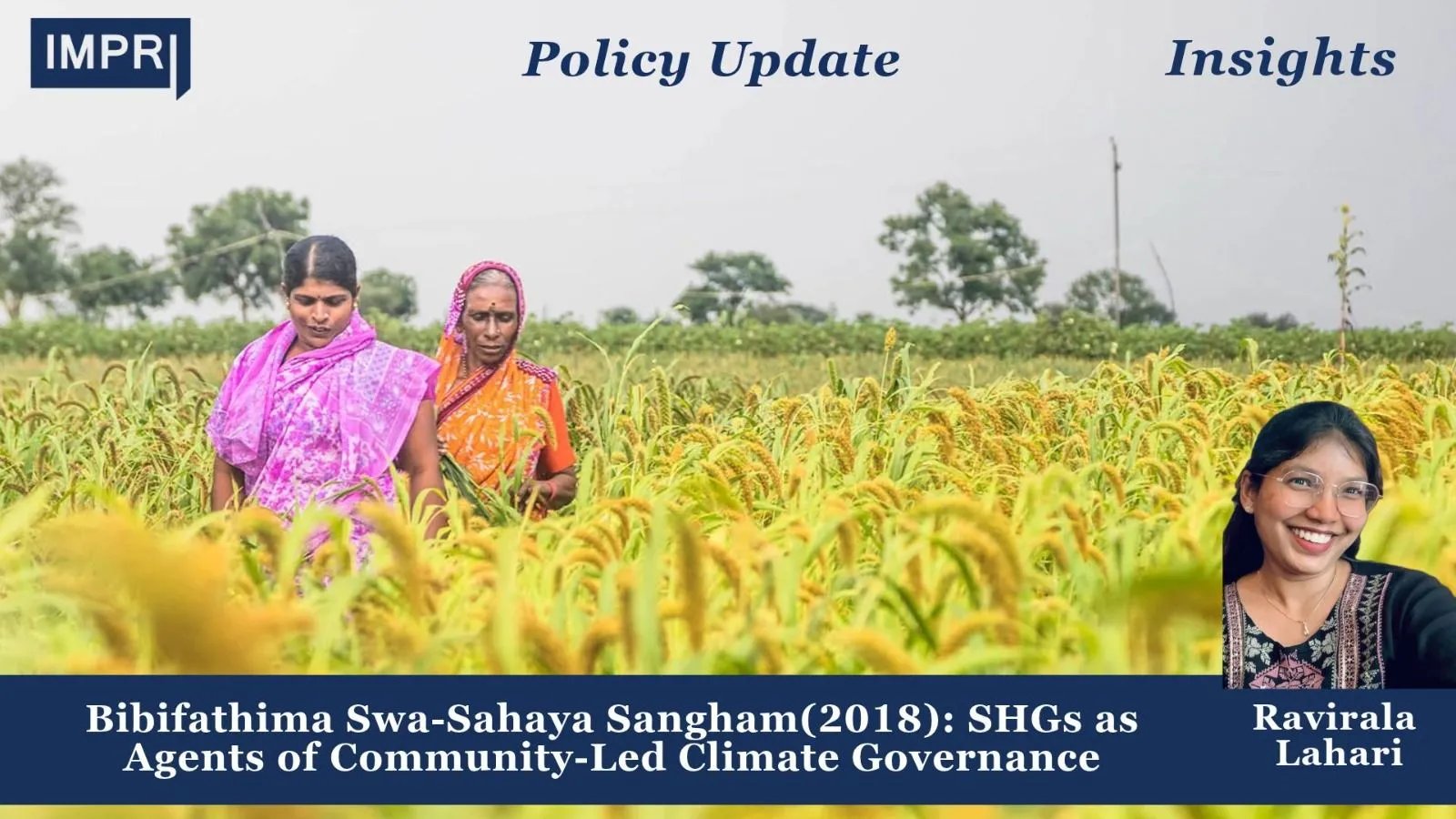
Teertha village in Kundgol taluk of Dharwad district, Karnataka, sits on undulating terrain with rich black soil and has historically been a major production centre of little millet. Over 60-70% of Karnataka’s cultivated land is rain-fed (B. S. Rao & Rao, 2025). After 2007, farmers across Dharwad and neighboring taluks aggressively shifted away from traditional dryland millets toward water-intensive and input-heavy cash crops like maize, cotton, and rice. Erratic rainfall, frequent droughts, soil degradation, and rising chemical input costs eroded farm profitability. Farmers who tried to return to millets found that perceived low market returns and the drudgery of post-harvest de-husking and cleaning held them back, and they also lacked good-quality seed suited to the changed climate (Desk, 2026).
It was in this setting that the Bibifathima Swa Sahaya Sangha (Bibifathima Self Help Group) emerged in 2018. Founded in Teertha by Bibijaan Maulasaab Halemani (Bibi Fatima) along with 14 other rural women, it began as a savings group of 15 women with support from the NGO Sahaja Samrudha. Initially formed as a savings collective, the group gradually expanded its activities towards indigenous seed conservation, millet cultivation and women’s entrepreneurship.
The Sangha demonstrates how women’s self-help groups can evolve beyond conventional microfinance activities into grassroots institutions supporting agricultural biodiversity, climate adaptation and sustainable livelihoods. By integrating traditional agricultural knowledge with collective enterprise, renewable energy and institutional partnerships, it has developed a community-based approach to strengthening rural resilience.
Functioning
The Sangha operates through an interconnected model that links seed conservation, agricultural production, processing and marketing. Rather than functioning as an isolated SHG, it collaborates with farmers, research institutions, civil society organisations and producer enterprises.
Community seed conservation and agricultural revival: A community seed bank was established in Teertha in 2019 to improve access to indigenous crop varieties. The group works with farmers to cultivate and preserve traditional seed varieties, including different types of millets, pulses and oilseeds.
Under its seed-return arrangement, farmers receiving seeds are expected to return twice the quantity after harvest, allowing the seed bank to replenish its stocks and distribute them to other cultivators. The group also assembled a “Navdhanya Kit” comprising nine diverse seed varieties, promoting millet-based mixed cropping , given free to selected farmers from Haveri, Dharwad, Gulbarga, Mysore and Mandya and sold to others. These initiatives encourage crop diversification, preserve traditional agricultural knowledge and improve access to locally adapted seeds (Amin, 2026).
Decentralised processing and renewable energy: Recognising that labour-intensive de-husking and processing discouraged farmers from cultivating millets, the group established a processing unit in 2021 with financial and technical support from ICAR-Indian Institute of Millets Research (ICAR-IIMR), Hyderabad, Sahaja Samrudha and CROPS4HD project. The facility includes machinery for cleaning, grading, de-stoning, milling, de-hulling and packaging. SELCO Foundation supported its solarisation, reducing dependence on conventional electricity and improving the reliability of processing operations. Broken grain is collected separately as semolina for products such as vermicelli, and farmers can use the unit to process their own produce (Desk, 2026).
Women’s entrepreneurship and market linkages: The processing activities are connected to Devadhanya Farmer Producer Company (FPC), which facilitates value addition and marketing. The millet-based products processed by the SHG are marketed through the FPC, enabling the women-led initiative to reach wider consumer markets. Products include ragi malt, millet-based flour, dosa mixes, flakes and herbal soaps made from papaya, neem, tulsi, turmeric and aloe vera, which are exhibited at events like Hampi Utsav. The Sangha has thus connected conservation with commercial viability, creating opportunities for women to participate in production, processing and marketing rather than remaining confined to agricultural support activities.
Institutional expansion and collective participation: Bibi Fatima has gone on to form 40 SHGs in Kundgol and 10 in Shiggaon, and 83 SHGs under the NRLM-Sanjeevini network. Under the ICAR Shree Anna Gram Yojane (AICRP on Women in Agriculture), villages in Shiggaon taluk bought seed from the Teertha seed bank. The involvement of multiple SHGs creates opportunities for sharing agricultural knowledge, accessing institutional support and extending seed conservation practices to other farming communities (Rukmini, 2024) .
Aligned Public Policies & Schemes: The Sangha’s activities intersect with several central and Karnataka state policy frameworks. These connections demonstrate the relevance of coordinated rural development, agricultural and environmental policies. However, policy alignment should be distinguished from direct scheme participation: the following frameworks provide relevant institutional support or opportunities, but not all are documented as sources of assistance received by the Sangha.
- Deendayal Antyodaya Yojana-National Rural Livelihoods Mission (DAY-NRLM): The mission promotes women’s SHGs, financial inclusion, livelihood diversification and community-based institutions. Its implementation in Karnataka through Sanjeevini-Karnataka State Rural Livelihood Promotion Society provides an institutional framework relevant to the Sangha’s expansion and collective enterprise activities. The group’s value-added millet processing fits the Lakhpati Didi goal of raising SHG women’s household income to ₹1 lakh or more a year(RaoP et al., 2026).
- Protection of Plant Varieties and Farmers’ Rights (PPV&FR) Act, 2001: Provides a legal framework for recognising and protecting farmers’ rights over traditional seed varieties conserved by the SHG.
- PM Formalisation of Micro Food Processing Enterprises (PMFME): Offers a relevant policy framework for supporting micro food-processing enterprises and value addition, aligning with the SHG’s millet-processing activities.
- National Millet Mission: Promotes millet cultivation, processing and value-chain development, complementing the SHG’s efforts in millet revival and market linkages.
- Union Budget 2026 SHE-MARTs Initiative: Serves as a direct precursor to the government’s 2026 policy push to transition rural SHG women from subsistence livelihood seekers into market-leading retail entrepreneurs.
Note: These are broader policy alignments, not evidence of direct scheme assistance or formal institutional linkage with the SHG.
Performance
Bibifathima Swa Sahaya Sangha has grown from 15 founding members in 2018 into a network that supports over 5,000 farmers across 30 villages in Karnataka. It also forms part of a federation of 83 SHGs, bringing together nearly 300 women across Dharwad district to strengthen collective livelihoods, agricultural activities and women’s economic empowerment (Bibifathima Swa Sahaya Sangha (Bibifathima Self Help Group) – Equator Initiative, 2025).
Its work on agrobiodiversity is equally notable: the community seed bank preserves more than 300 varieties of seeds of different crops, including Finger Millet (Ragi): 75 varieties; Little Millet (Saave): 25 varieties; Brown Top Millet (Korale): 25 varieties; Foxtail Millet (Navane): 10 varieties; and Proso Millet (Baragu): 2 varieties. Alongside millets, the bank also holds pulses and oilseeds, so the group is safeguarding the seed base that farmers lacked when they tried to return to millets (Vásquez, n.d.).
The group has also turned this conservation work into an enterprise. Its solar-powered unit processes about 30 quintals of millets a week into unpolished millet rice, flakes, ragi malt, multigrain atta and ready-to-eat rotis, which addresses the post-harvest drudgery that once pushed farmers away from millets. Solarisation cut the unit’s monthly electricity bill by 62.5%, from ₹8,000 to ₹3,000 (Newstrail, 2026) .
Backed by a ₹15 lakh Agriculture loan and ₹80,000 of SHG equity, the enterprise reports an average profit margin of about 20% on value-added products sold across six states: Karnataka, Maharashtra, Telangana, Andhra Pradesh, Tamil Nadu and Odisha. Its farmer-producer company, Devadhanya, was formed with 1,000 shareholders, 80% of them women, and sells about 5 quintals of millet flakes a week. Roti, for instance, sells at ₹7-8 within the district and ₹10 outside (Rukmini, 2024).
Impact
1. Socio-Economic and Livelihood Impact
- Farmers: The model has reduced smallholders’ dependence on middlemen by linking them to local processing and direct markets.
- Women and youth: It has created steady non-farm employment in the village. The processing unit is managed entirely by women, so value addition generates income for them directly.
- Leadership: Bibi Fatima attained economic independence and social recognition and now serves as a secretary in the panchayat. Deccan Herald recognised her as a Change Maker in 2023.
2. Food and Nutrition Security
- By reviving millet-based mixed cropping and making local seed available, the group offers farmers a food-secure alternative to the maize and cotton cycle.
- Nutrient-dense millets have returned to local diets.
3. Biodiversity and Climate Resilience
- Millet-based multi-cropping needs minimal water and synthetic inputs, so it acts as a natural buffer against erratic monsoons while helping regenerate degraded dryland soils.
- Conserving local landraces adapted to rainfed, drought-prone land is a hedge against climate shocks. Community seed banks keep the varieties best suited to local conditions under the community’s own control.
4. Clean Energy
- Solar-powered processing reduces dependence on grid supply in a rural setting.
- Pairing distributed solar with agroecology creates a near-zero-carbon rural value chain, and this was one reason the initiative qualified under the Equator Prize’s sustainable energy theme.
5. Recognition
- UNDP Equator Prize (August 2025): which is also widely known as the “Nobel Prize for Biodiversity Conservation” and the Equator Initiative Award. One of 10 global winners from over 700 nominations across 103 countries, recognised for nature-based climate action, sustainable energy and women-led biodiversity conservation. It carried a USD 10,000 prize and representation at COP30 (The Hindu Bureau, 2025).
- Plant Genome Saviour Community Award (November 2026): Conferred by the Government of India’s PPV&FR Authority with a ₹10 lakh cash prize, for conserving indigenous crop genetics and reviving traditional dryland farming (Shivam, 2026).
Alignment with the SDGs
The Bibifathima Swa Sahaya Sangha’s work maps onto several Sustainable Development Goals. Reviving millet-based mixed cropping and bringing nutrient-dense millets back into local diets supports SDG 2 (Zero Hunger).
While women-led value addition, steady non-farm employment and better farm margins contribute to SDG 1 (No Poverty) and SDG 8 (Decent Work and Economic Growth). The Sangha is led and managed by rural women, who have gained income, leadership and decision-making roles, which advances SDG 5 (Gender Equality).
Its solar-powered processing unit, which cuts electricity costs, relates to SDG 7 (Affordable and Clean Energy). Low-input millet cultivation and processing support SDG 12 (Responsible Consumption and Production), and drought-hardy crops with soil regeneration build climate resilience under SDG 13 (Climate Action).
Conserving indigenous seed varieties in a community seed bank protects agrobiodiversity, in line with SDG 15 (Life on Land). Its partnership with Sahaja Samrudha and its links with banks, government schemes and markets reflect SDG 17 (Partnerships for the Goals).
Emerging Issues
- Market Price Asymmetry: Conventional cash crops still benefit from entrenched procurement networks, whereas heritage landraces lack guaranteed Minimum Support Price (MSP) premiums, making farmer retention vulnerable during price fluctuations.
- Working Capital & Credit Scaling: While initial machinery loans were secured, scaling FPO inventory, packaging compliance, and multi-state cold/dry storage requires larger collateral-free working capital lines.
- Genetic Documentation Gaps: Many conserved landraces remain informally documented at the community level, with limited scientific genetic characterization and inadequate formal documentation in institutional biodiversity records, restricting their recognition and integration into mainstream agricultural research and extension systems.
- Labor Intensity in Natural Farming: Transitioning smallholders to chemical-free multi-cropping increases on-farm labor demands for manual weeding, composting, and mulching, which can strain household labor during peak seasons.
- Asymmetric Institutional Scaffolding (The Replication Gap): Bibifathima SHG’s success relied heavily on specialized hand-holding from civil society partners like Sahaja Samrudha and the SELCO Foundation, alongside technical validation from research institutes. Replicating this model in other regions remains difficult because most rural SHGs lack access to such bespoke intermediary ecosystems and must rely on conventional state extension services not yet geared toward decentralized climate enterprises.
Way Forward
- Institutionalize Community Seed Banks: Integrate SHG-run seed banks into state agricultural missions and State Biodiversity Boards to formally map, characterize, and register indigenous landraces under the PPV&FR Act.
- Mandate Public Procurement & SHE-MART Linkages: Connect women-led millet FPOs directly to state nutritional safety nets (ICDS Anganwadis, PM-POSHAN mid-day meals) and newly launched SHE-MART retail outlets to guarantee stable off-take above baseline costs.
- De-Risk Decentralized Renewable Energy (DRE) Financing: Expand blended finance (combining PMFME subsidies with low-interest NABARD/RRB credit) so rural women’s collectives can acquire solar-powered agro-processing machinery without heavy upfront equity burdens.
- Reward Ecosystem Services: The Karnataka Department of Agriculture, through district agriculture offices and DBT mechanisms, should provide targeted financial incentives or input subsidies to dryland farmers adopting regenerative, chemical-free mixed cropping to offset higher manual labor costs during the initial transition years.
- Integrate SHG Federations into District Climate Action Plans: State Rural Livelihood Missions (SRLMs) and Environment Departments should formally designate Village Organizations (VOs) and Cluster Level Federations (CLFs) as implementing agencies for District Disaster Management and Climate Adaptation Plans, channeling green finance and carbon-credit revenues directly to women-led seed banks and solar micro-enterprises.
References
- Amin, A. (2026, March 27). Bibijan Halemani dared to dream-Of millets, and a better world for women. Good Food Movement. Akshayakalpa.Org. https://gfm.akshayakalpa.org/read/feature-article/bibijan-halemani-self-help-group-karnataka-millets-equator-initiative-award
- Desk, T. L. (2026, November 7). In 2018, a Karnataka woman brought 14 others together to save disappearing traditional crop seeds; eight years later, their work spans 30 villages and they have been selected for a national award worth rs 10 lakh. The Times Of India. The Times of India. https://timesofindia.indiatimes.com/life-style/people/in-2018-a-karnataka-woman-brought-14-others-together-to-save-disappearing-traditional-crop-seeds-eight-years-later-their-work-spans-30-villages-and-they-have-been-selected-for-a-national-award-worth-rs-10-lakh/articleshow/135601913.cms
- Newstrail. (2026, June 2). How Bibi Fatima SHG transforms rural farming. Newstrail. https://newstrailindia.com/inner.php?id=30132
- Rukmini. (2024, June 30). Leading by example: A success story of bibi fatima – LEISA India. LEISA India. https://www.leisaindia.org/leading-by-example-a-success-story-of-bibi-fatima/
- Shivam. (2026, November 14). Plant genome saviour awards 2026: Bibi fathima SHG and Karnataka farmers honoured for seed conservation. Adda247. https://currentaffairs.adda247.com/plant-genome-saviour-awards-2026-bibi-fathima-shg-and-karnataka-farmers-honoured-for-seed-conservation/
- Bibifathima Swa Sahaya Sangha (Bibifathima Self Help Group) – Equator Initiative. (2025, July 31). https://www.equatorinitiative.org/2025/07/31/bibifathima-swa-sahaya-sangha-bibifathima-self-help-group/
- Rao, B. S., & Rao, B. S. (2025, December 29). The quiet exit of rain-fed farming. The Migration Story. https://themigrationstory.com/post/the-quiet-exit-of-rain-fed-farming/
- RaoP, N., N, Dr. Ramakrishna. G., & Fernandes, J. (2026). Economic empowerment of women farmers through natural farming practices in Karnataka State, India. International Journal for Research Trends in Social Science & Humanities. https://doi.org/10.5281/zenodo.22724775
- Vásquez, V. M. (n.d.). Teertha Community Seed Bank. https://www.farmersrights.org/getfile.php/134020-1724661611/Dokumenter/Bibifathima%20CSB%281%29.pdf
About the Contributor
Lahari is a Public Administration and Governance postgraduate from the Central University of Karnataka, with a keen interest in Urban Governance, Public Policy, and Sustainable Development. Committed to making governance more inclusive, sustainable and having a tangible impact on citizens’ lives.
Reviewed by
Aditi Bhuniyan and Rakesh Leel
Acknowledgement
I am writing to express my sincere gratitude to IMPRI (Impact and Policy Research Institute) for providing me with the opportunity to prepare this policy update article and for fostering a rigorous learning environment that connects research with public policy practice.
Disclaimer
The views and opinions expressed in this article are solely those of the author and do not necessarily reflect the views, policies, or positions of IMPRI (Impact and Policy Research Institute) or any other affiliated organisation.
Read more at IMPRI:
Recalibrating Global Power: The Strategic Significance of the New Delhi Declaration, BRICS 2026