





Kavita
Agriculture has long been the backbone of rural India, not merely as a livelihood but as a cultural identity. Yet, in recent decades, this foundation has begun to shift. Although agriculture still employs over 45% of India’s workforce, its dominance has declined sharply from around 70% a few decades ago. The rural economy is diversifying, but this transformation is marked more by distress than opportunity.
Smallholder farmers, who form the majority, are facing economic pressure from shrinking landholdings, stagnant productivity, and volatile prices. A recent NABARD survey revealed that the average farm size dropped from 1.08 hectares in 2016–17 to just 0.74 hectares in 2021– 22—a one-third decline in only five years. Rising input costs and low returns are pushing families to supplement farming with wage labour or micro-enterprises. However, rural job markets remain inadequate. Employment generation has not kept pace with the aspirations of millions of young Indians.
The skills gap is a critical barrier. According to the National Skill Development Corporation (NSDC, 2024), only 5% of India’s rural workforce is formally skilled. Despite ambitious programmes like Skill India, rural coverage remains weak, and training often fails to align with actual market demands. Only 46% of youth are considered employable without additional training, with the gap especially stark in remote areas.
Environmental Stress on Agriculture
Agriculture’s challenges are not purely economic. The ecological base that sustains it is deteriorating rapidly. Nationwide, around 30% of soils suffer from degradation due to erosion, salinity, or nutrient depletion. Intensive farming zones like Punjab, Haryana, and Gujarat are experiencing severe soil fatigue. In Haryana, decades of monocropping and excessive fertilizer use have depleted groundwater and compromised soil health.
Forests and tree cover—crucial for water recharge and climate stability—are also receding. The Forest Survey of India (2023) reported that Haryana lost 0.83 sq km of very dense forest and 4.2 sq km of moderately dense forest between 2021 and 2023, even as scrubland expanded. As ecosystems weaken, long-term agricultural productivity becomes more uncertain. Experts warn that if soil degradation continues, India may have to import food it currently produces domestically—an alarming scenario for a country that feeds 18% of the global population on just 2.4% of the world’s land.
Migration and Changing Rural Demographics
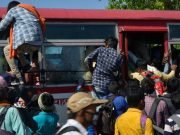
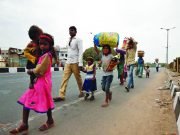
The convergence of economic and environmental pressures is driving millions from villages to urban areas. Rural-to-urban migration stood at 28.9% in 2021 and is projected to approach 40% by 2030. Youth, in search of better livelihoods, are leaving agriculture for jobs in construction, services, and small industries.
Haryana exemplifies this shift. While cities like Gurugram and Faridabad thrive on migrant labour, many villages face seasonal workforce shortages. Yet, peri-urban areas are also becoming transitional spaces of hope. For instance, Vikram, an electrician who migrated from Assam to Mohammadpur Ahir, a village near Gurugram. He now lives there with his family, having found more stability than in his native region. Similarly, a Punjabi family that migrated decades ago now runs a successful grocery store in the same village. Such stories reflect how villages near urban centres can offer better access to education, healthcare, and income.
The pandemic also triggered large-scale reverse migration. Between 2019 and 2024, about 68 million people returned to rural areas, according to ILO-affiliated studies and PLFS data, reversing an earlier trend of urban migration. Agriculture’s share of the rural workforce rose from 42.5% in 2018–19 to 46.1% in 2023–24—not because farming became more lucrative, but because urban opportunities dried up.
The Feminisation of Farming and the Youth Skill Divide
As men migrate, women increasingly shoulder farm and household responsibilities. Rural women’s labour force participation rose from 25% in 2017–18 to 43% by 2022–23, mostly through self-employment in agriculture or home-based enterprises. However, this feminisation of agriculture often reflects economic stress, with many women working unpaid on family farms rather than entering formal employment.
The youth face parallel challenges. With limited access to quality education or vocational training, many end up in informal or low-paid work. Despite policy efforts, rural India remains underserved in terms of skill development infrastructure, exacerbating the mismatch between aspirations and economic realities.
Implications for Food Security and Sustainability
The combined effects of land degradation, shrinking farm sizes, and labour shortages threaten India’s food security. Falling groundwater levels in states like Haryana have forced a shift from double-cropping to mono-cropping, reducing both yields and biodiversity. Women and children, already vulnerable, are disproportionately affected by nutritional insecurity.
Sustainable agriculture is no longer optional—it is essential. Forests, pollinators, and healthy soils are not luxuries; they are fundamental to farming’s future. As environmental journalist Dr. Ramesh Menon notes, ignoring ecological degradation risks both livelihoods and public health.
Way Forward: A Holistic Rural Revitalization
India’s rural revival must go beyond subsidies and mechanisation. It requires an integrated approach: promoting agroecological practices like crop diversification, organic farming, and agroforestry; expanding rural skill centres in partnership with NSDC and local industries; and aligning training with real-world needs such as digital literacy, food processing, or climate resilient agriculture.
Public-private partnerships can foster micro-enterprises and improve access to alternative incomes like livestock rearing. Payment-for-ecosystem services schemes—where farmers are incentivised to conserve wetlands or adopt sustainable practices—can turn ecological stewardship into an economic asset.
Crucially, rural communities themselves must help shape these solutions. Women, youth, and marginal farmers hold knowledge and aspirations that can guide locally tailored strategies. If harnessed effectively, they can lead the way toward a rural India that is economically vibrant, ecologically resilient, and socially inclusive.
References
Food and Agriculture Organization. (2022). The future of food and agriculture – Drivers and triggers for transformation.
https://www.fao.org/global-perspectives-studies/fofa/en/)
Forest Survey of India. (2023). India State of Forest Report 2023: Volume I. Ministry of Environment, Forest and Climate Change, Government of India. (https://fsi.nic.in/uploads/isfr2023/isfr_book_eng-vol-1_2023.pdf)
Indian Council of Agricultural Research. (n.d.). Weather based Crop Advisory. https://icar.org.in/weather-based-crop-advisory
International Labour Organization & Institute for Human Development. (2024). India Employment Report 2024: Youth employment, education and skills. https://ruralindiaonline.org/en/library/resource/india-employment-report-2024-youth employment-education-and-skills/
National Skill Development Corporation. (2024). Annual Reports. https://nsdcindia.org/annual-reports
NITI Aayog. (2025). Annual Report 2024–25. Government of India. https://www.niti.gov.in/sites/default/files/2025-02/Annual%20Report%202024- 25%20English_FINAL_LOW%20RES_0.pdf World Bank. (2023).
India Development Update: India’s Trade Opportunities in a Changing Global Context. https://documents.worldbank.org/en/publication/documents reports/documentdetail/099513209032434771
About the Contributor: Kavita is a PhD Scholar and a fellow of EPAYF 2.0 – Environment Policy and Action Youth Fellowship, Cohort 2.0.
Disclaimer: All views expressed in the article belong solely to the author and not necessarily to the organisation.
Read more at IMPRI:
Everyday Sustainabilities: Rural Women and Everyday Environmental Action
Climate Adaptation at the Grassroots: The Untapped Power of Gram Panchayat Development Plans
Acknowledgment: This article was posted by Riya Rawat, researcher at IMPRI.