



Anil Trigunayat
The invasion of Iraq in 2003 was the mother of all evils in West Asia. Firstly, the 2003 invasion was fabricated and justified on the manufactured premise of Saddam Hussein possessing weapons of mass destruction (WMD) which was eventually proved wrong and publicly admitted by the US and British leadership.
Regrets were far too little and far too late; the damage was done. The seeds of regional instability were sown by the Americans who had no clue what they wanted. Only a few shed tears for the tyrant Saddam Hussein, but what followed caused more problems and uncertainty.
Their oil revenue was controlled, and benefit did not flow for the ordinary Iraqis. Extremists and terrorist groups found a fertile ground for groups like Al Qaeda, ISIS/ISIL (Daesh) and their subgroups and clones which compounded the vicious cycle of continued presence of the foreign forces.
There has been a call for removal of foreign forces for a long time and sporadic attacks have happened on the US bases especially after Iranian Revolutionary Gurad Corps (IRGC) Head General Qassem Soleimani was assassinated by Americans in a drone attack during his visit to Iraq.
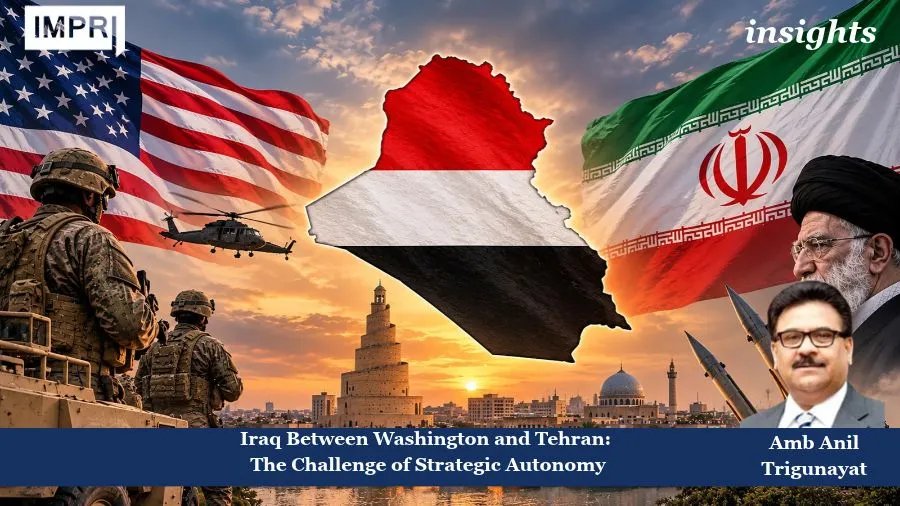
But one of the most consequential outcomes was that the Iranians got Iraq on a gift platter from their arch enemies the ‘Great Satan’: the United States of America. It was cemented by the confession-based division of executive and legislative high posts in the so-called ‘New Iraq’, whose aspirations have remained unfulfilled.
More from Opinion

Better a martyr than a footnote: Hasina’s return gambit is Rahman’s ultimate test MSD, yellow and an enduring love story destined to continue
The outcome of wars is often as unpredictable as history informs us. Tehran used it to reinforce its presence in the region especially in the Levant through its powerful proxies and militia groups that indulged in decision making from Iraq to Lebanon to Syria and finally in Yemen.
Disorder and conflict became routine, and suffering of the people continues unabated as MAD syndrome of Iran on one side and the US and Israel on the other, has led to ongoing wars and conflicts disrupting stability and supply chains. This will further lead to redistribution of power dynamics in West Asia whenever the situation settles down.
Meanwhile, Iraqi Prime Minister Ali al-Zaidi’s visit to White House amidst the ongoing US-Iran war led to the reaffirmation of the US finally evacuating its bases; the US-led coalition’s military mission in federal Iraq ended on September 30, 2026.
Some observers believe that this was an eyewash, as significant number of forces have been relocated to the Kurdish part of Iraq, as many remain at stake. It was also active for supporting oil supplies and support to their mission in Syria through SDF till another dictator President Bashar al-Assad was removed by the HTS led by current leader President al Sharaa in a comparatively much less violent campaign.
This also reduced Iranian influence in the Levant especially as Israel decapitated the leaders of Hezbollah, Hamas and even Iran with the help of Washington and continues the same path.
In any case there is a consensus that a successful US transition depends less on troop numbers reduction or withdrawal than on retaining intelligence and training ties, strengthening Iraqi regular forces and Peshmerga coordination, and tying their funding availability and command to enforceable state oversight and control.
But the problem is disarming militias in Iraq and absorbing them in regular forces for which Prime Minister Zaidi has set up June 30, 2027, as the deadline.
Several powerful militias have agreed, but a dozen major, Iran-aligned factions have national reach, weapons, money, and political leverage that make their role quite decisive. These include Badr, Kataib Hezbollah, Asaib Ahl al-Haq, Harakat al-Nujaba which still might have an impact on the Iraqi government’s capability to exercise its sovereignty.
Therefore, after his US visit, Prime Minister Zaidi dashed to Tehran. Some argue that Iraq conveyed a message from President Donald Trump. However, an Iranian nod will be essential to allow its allied militias like Kataib Hezbollah.
Popular Mobilisation Forces (PMF) like Hashd al-Shaabi can account for more than 60 groups of various hues and colours and have become coercive alternate centres of power undermining the state control due to their implied and real politico-militant heft and allegiance to the Iranian supreme leader.
They are quite powerful, not only in their surprise elements but also in numbers with over 2,40,000 combatants and corresponding influence and fire power. In fact many of them had fought against the ISIS. They would like to retain that heft.
As of now, the government plans to offer only 35,000 positions to whoever wants to surrender arms and wishes to be integrated with the central authority.
Moreover, ISIS is also being revived; that could pose an additional threat to stability and integration efforts, especially if Syrian landscape remains unstable.
Mere disarming may not yield the requisite dividends. The government will have to reform and revise the whole power sharing and political structure to win back the state control in reality.
This Iranian cooperation will be critical. Integrating the parallel centers of authority and pruning their autonomy is no mean task. Libya has failed to do that mainly because of the malign involvement of external actors who were instrumental in destabilising it in the first place.
Let us hope Iraq will succeed, but how will it be able to achieve it especially as long as the war against Iran remains intractable and Tehran will have no incentive to cooperate.
Credibility of the campaign is also crucial as the effort might be interpreted as the sheer US proxy, which Suo-motto generates violent reaction in the region.
Against all these implicit and explicit challenges and nuances of the ground reality of the dispersed power structures, Baghdad needs full and genuine support of the international community and early closure and resolutions of the ongoing wars and generational legacy issues like Palestine, and the region taking the reins of security for its own good rather than depending on the external actors for whom it is merely a game of chess or dice.
About the Author
Anil Trigunayat, is a former Indian Ambassador to Jordan, Libya and Malta, and currently heads the West Asia Experts Group at Vivekananda International Foundation.
This article was first published in Firstpost as America may leave Iraq, but can Baghdad escape Iran’s shadow? on 12th October 2026.
Disclaimer: All views expressed in the article belong solely to the author and not necessarily to the organisation.
Read more at IMPRI:
Strengthening India’s Global Diplomatic Presence
Nyaya Setu- AI-Powered Legal Assistance Chatbot, 2026
Acknowledgements:
This article was posted by Mahenoor Imam, a Research and Editorial Intern at IMPRI.