








Policy Update
Debjani Chatterjee
Background
Thalassemia is a major public health concern in India, which accounts for approximately 25% of the global β thalassemia burden (Sharma et al., 2023). Controlling this burden requires awareness programmes, prenatal screening, genetic counselling and accessible diagnostic facilities, particularly in rural areas (Sharma et al., 2023).
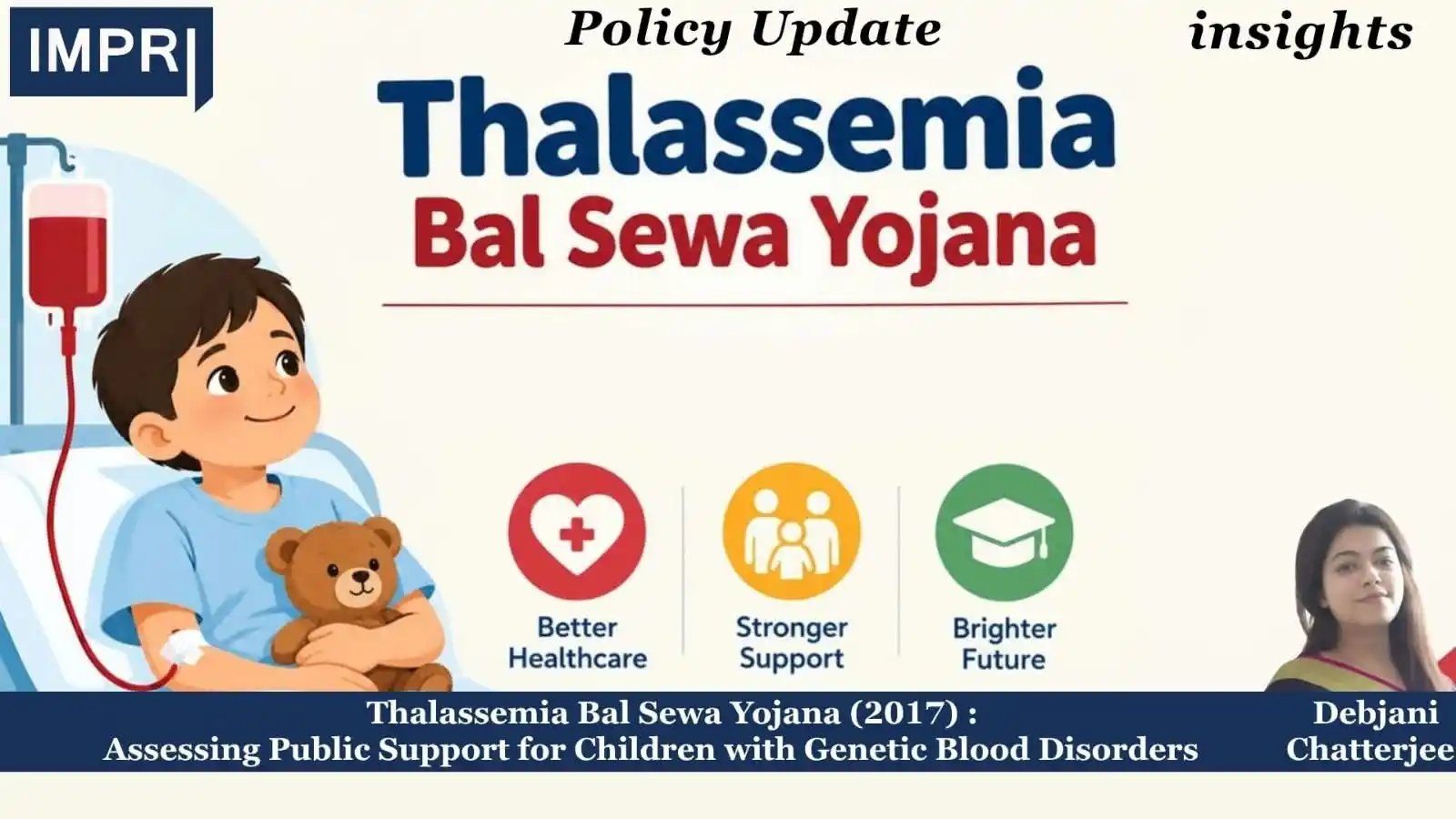
In India, the Thalassemia Bal Sewa Yojana was launched in 2017 by the Union Ministry of Health and Family Welfare in association with Coal India Limited. Supported through corporate social responsibility (CSR) funds, the scheme provides financial assistance of up to ₹10 lakh to eligible patients for bone marrow transplantation (Ministry of Health and Family Welfare, 2020). The scheme demonstrates how public institutions and corporate support can help make specialised treatment more accessible to children from economically disadvantaged families.
Functioning
1. Institutional Architecture: The scheme is supported by the Ministry of Health and Family Welfare and funded by Coal India Limited (CIL) through its Corporate Social Responsibility (CSR) initiative. Thalassemics India supports coordination and outreach.
2. Funding Mechanism: (CIL), through its Corporate Social Responsibility (CSR) funding in association with the Union Ministry of Health and Family Welfare, provides financial assistance of up to ₹10 lakh per eligible patient for bone marrow transplantation under the Thalassemia Bal Sewa Yojana. The scheme covers eligible thalassemia patients aged 12 years or younger and patients with aplastic anaemia aged 18 years or younger, subject to the applicable clinical and donor matching criteria. The annual family income limit is ₹8 lakh. Donor eligibility varies according to the disease and transplant category (Ministry of Health and Family Welfare, 2020; Ministry of Health and Family Welfare, 2025).
3. Beneficiaries: The scheme targets eligible children from economically weaker families suffering from thalassemia or aplastic anaemia who require bone marrow transplantation.
4. Implementation Process: Eligible patients are assessed and referred for treatment through the scheme’s network of empanelled hospitals. Approved financial assistance is provided directly to the hospitals.
5. Monitoring Mechanism: The Ministry of Health and Family Welfare provides monitoring guidance, while CIL oversees funding and programme information.
6. Stakeholders: Key stakeholders include CIL, the two central ministries, Thalassemics India, empanelled hospitals, medical professionals and beneficiary families.
Performance
1. Increase in Completed Transplants: The scheme had completed 356 bone marrow transplants by May 2023. This number increased to 680 by February 2025 and exceeded 1,050 by September 2026, indicating a substantial expansion in treatment delivery (Ministry of Health and Family Welfare).
2. Expansion of Hospital Network: The number of empanelled hospitals increased from 10 in May 2023 to 17 in July 2025 and 21 by September 2026. This expansion has increased the number of centres available to eligible patients across India.
3. Financial Assistance per Patient: Under the scheme, eligible patients can receive up to ₹10 lakh for bone marrow transplantation. The assistance is transferred directly to the treating institution, reducing the need for beneficiaries to arrange the entire treatment cost themselves.
| Financial Indicator | Amount |
| Maximum assistance per eligible patient | ₹10 lakh |
| Outlay across first three phases | ₹70 crore |
| Expenditure reported for FY 2022 to 23 | ₹9.40 crore |
| Total outlay across four phases | ₹130 crore |
Source: Ministry of Coal.
4. Growth in Financial Commitment: The Ministry of Coal reported a total outlay of ₹130 crore across four phases by September 2026. An earlier government document recorded an outlay of ₹70 crore across the first three phases, showing an increase in the scheme’s overall financial commitment.
5. Achievement During the Initial Phases: By the end of financial year 2022 to 23, the scheme had completed 356 transplants against a reported target of 700 beneficiaries across three phases. This provided an early measure of treatment delivery, although the target and completed transplants may not represent identical reporting categories.
6. Introduction of Online Application Tracking: In May 2023, the Ministry of Health and Family Welfare launched a dedicated scheme portal. It enabled patients to submit applications online and track progress from registration to closure, improving access to application status information.
7. Inclusion of Aplastic Anaemia: The scheme supports eligible patients with both thalassemia and aplastic anaemia. This extends its scope beyond one inherited blood disorder to include another serious condition requiring specialised treatment.
8. Reported Health Outcomes: In September 2026, the Ministry of Coal reported that the overwhelming majority of treated children were leading normal, healthy lives. However, the release did not provide detailed survival rates or long term follow up figures, limiting independent assessment of these outcomes.
| Indicator | Reported progress | Date |
| Completed transplants | 356 | May 2023 |
| Completed transplants | 500 | 2024 milestone |
| Completed transplants | 700 | May 2025 |
| Completed transplants | More than 1,050 | September 2026 |
| Empanelled hospitals | 10 | May 2023 |
| Empanelled hospitals | 17 | April 2025 |
| Empanelled hospitals | 18 | May 2025 |
| Empanelled hospitals | 21 | September 2026 |
Impact
1. Improved Access to Curative Treatment: Bone marrow transplantation offers a potential curative treatment for eligible children with thalassemia. The Ministry of Health and Family Welfare reported that 356 completed transplants by May 2023, demonstrating that the scheme has helped children access treatment that may otherwise remain unaffordable.
2. Reduced Out of Pocket Expenditure: Bone marrow transplantation can place a heavy financial burden on families, particularly those who cannot afford expensive treatment. Under the Thalassemia Bal Sewa Yojana, eligible patients receive financial assistance of up to ₹10 lakh per transplant, funded through Coal India Limited’s Corporate Social Responsibility funds (Press Information Bureau, 2023). This support can reduce the amount families need to pay from their own savings or arrange through loans and asset sales. However, government reports do not provide patient wise data on out of pocket expenditure before and after receiving assistance, so the actual savings for families cannot be quantified.
3. Better Prospects for Long Term Health: Successful transplantation can reduce or eliminate the need for regular blood transfusions in suitable patients. In September 2026, the Ministry of Coal reported that the overwhelming majority of children treated under the scheme were leading normal, healthy lives. This is an encouraging government reported outcome, although detailed long term follow up data are not publicly presented.
4. Relief from Repeated Treatment: Children with transfusion dependent thalassemia often require continuing transfusions and medical monitoring. Successful transplantation may reduce this recurring treatment burden, giving children and caregivers more time for education, work and everyday activities.
5. Support for Caregivers: Regular hospital visits and long term treatment can disrupt parents’ employment, household responsibilities and family income. Financial support for transplantation may ease some of this pressure, although the scheme’s specific effect on caregiver income and wellbeing has not been quantified.
6. Wider Access to Specialised Healthcare: The expansion of the scheme from four hospitals to 21 by September 2026 has increased the number of centres where eligible patients can seek treatment. This may reduce the need for some families to travel long distances, although differences in travel costs and regional access remain insufficiently documented.
7. Greater Role for Corporate Social Responsibility: The ThalassCoal India Limited has used its CSR resources to provide financial assistance of up to ₹10 lakh per eligible patient for bone marrow transplantation. According to the Ministry of Coal, more than 1,050 bone marrow transplants had been completed under the scheme by September 2026, with treatment available through 21 empanelled hospitals (Press Information Bureau, 2026). This demonstrates how corporate funding, hospital expertise and government coordination can expand access to expensive, specialised treatment and reduce financial barriers for families who might otherwise struggle to afford it.
Emerging Issues
1. Limited Transparency in Long Term Outcomes: The government reported more than 1,050 completed bone marrow transplants under the Thalassemia Bal Sewa Yojana by September 2026. However, this figure does not establish how many children survived or maintained good health in subsequent years. Public reports provide limited consolidated data on long term survival, complications, disease recurrence and quality of life. The government should establish systematic post transplant monitoring with empanelled hospitals. Records should track survival at one, three and five years, major complications, relapse and ongoing healthcare needs. Annual reports presenting these outcomes while protecting patient privacy would help assess long term effectiveness and identify gaps in post transplant care.
| National indicator | Figure |
| Individuals screened | 15,87,903 |
| Identified as affected | 5,037 |
| Identified as carriers | 50,462 |
Source: Ministry of Health and Family Welfare.
2. Unequal Access to Specialised Hospitals: The expansion of the hospital network to 21 centres has improved treatment availability, but families living far from these centres may still face travel, accommodation and follow up costs. The number of hospitals does not necessarily reflect equal geographical access across states and regions.
3. Eligibility and Donor Requirements: The scheme supports eligible patients who require bone marrow transplantation, but access also depends on medical suitability and donor availability. The original programme description highlighted patients with a matched sibling donor. This means financial assistance alone cannot ensure that every child with thalassemia can receive a transplant.
4. Financial Support May Not Cover Every Cost: Assistance of up to ₹10 lakh is provided for transplantation at empanelled hospitals. However, families may still face indirect expenses related to travel, accommodation, investigations and continued medical care. Publicly available scheme data do not clearly quantify these additional household costs.
5. Treatment Must Be Supported by Continuing Care: Bone marrow transplantation is not suitable for every patient and may involve complications and prolonged medical supervision. The National Health Mission guidelines also recognise the importance of transfusion services, iron chelation, monitoring and psychological support. These services remain important for children who do not undergo transplantation.
6. Gaps in Publicly Available Monitoring Data: The government reports transplant milestones and hospital expansion, but detailed public data on applications received, approvals, rejected cases, waiting periods and state wise treatment outcomes remain limited. Such information would help assess whether eligible children receive assistance in a timely and equitable manner.
| Reported indicator | Further data needed |
| Completed transplants | Long term survival |
| Number of hospitals | State wise access |
| Maximum assistance | Actual family expenditure |
| Total outlay | Actual annual expenditure |
| Treatment completed | Complications and follow up |
7. Prevention Needs Greater Attention: In March 2025, the government reported that 15,87,903 people had been screened for thalassemia and 50,462 identified as carriers. These figures reflect wider national screening efforts, not TBSY achievements. They nevertheless highlight the need to connect treatment programmes with awareness, carrier screening and genetic counselling.
8. Dependence on CSR Funding: The scheme relies on Coal India Limited’s corporate social responsibility funding. Although this model has supported specialised treatment, transparent reporting on future funding commitments and continuity of care is important to ensure that patients are not left uncertain about access to treatment.
Way Forward
1. Publish Regular Outcome Reports: The Ministry of Health and Family Welfare and Coal India Limited should publish annual reports covering applications received, approvals, completed transplants, waiting times and patient outcomes. Key indicators should include the percentage of approved applications resulting in completed transplants and the average time between approval and treatment. Reporting these figures would improve transparency, identify delays and help assess whether eligible children are receiving timely treatment.
2. Improve Geographical Access: The government should map the locations of empanelled hospitals against patient demand and travel distances. Where establishing new transplant centres is not feasible, partnerships with existing government medical colleges and regional hospitals could help with screening, referrals and pre transplant assessments.
3. Provide Support Beyond Hospital Bills: Financial assistance should be reviewed periodically against actual treatment costs. A clearly defined support mechanism for eligible travel, accommodation and essential follow up expenses could reduce the additional burden on low income families. Any expansion should be based on documented patient needs and available funding.
4. Strengthen Donor Identification and Referral: Hospitals should provide early counselling on donor availability, medical suitability and transplantation requirements. Standard referral procedures could reduce delays in assessment and treatment. If a suitable donor cannot be identified, families should receive guidance on further donor searches and alternative options. Patients unsuitable for transplantation should also be guided towards accessible transfusion services, iron chelation therapy and regular follow up care under medical supervision.
5. Ensure Long Term Follow Up: Empanelled hospitals should maintain follow up records for at least several years after transplantation, subject to clinical guidance and patient consent. Reporting survival, complications and quality of life indicators would provide a clearer picture of treatment outcomes without disclosing personal patient information.
6. Connect Treatment with Prevention: State health departments should coordinate thalassemia awareness, carrier screening and genetic counselling through existing public health facilities. Counselling must remain voluntary, confidential and non discriminatory. Linking families to reliable information can support informed decisions without creating stigma around carriers.
7. Improve Application Assistance: District hospitals and existing health support centres could help families understand eligibility rules, collect documents and track applications. A named contact point for pending cases and a grievance process with clear response timelines would make the scheme easier to navigate.
8. Secure Predictable Funding: Coal India Limited and the concerned ministries should publish phase wise funding commitments and expenditure statements. Regular reviews of treatment demand, cost per transplant and available funds would help plan future coverage and identify gaps before they affect patients.
References and Links
About the Contributor
Debjani Chatterjee is a policy researcher with a background in Finance and Political science. Her work focuses on leveraging data analytics to support evidence based policy research.
Acknowledgement
My sincere thanks to the Impact and Policy Research Institute (IMPRI) for the opportunity to prepare this policy update article. IMPRI’s dedication to connecting research with actionable policy practice provides an invaluable platform for learning.
Reviewed by:
Khushi and Anamika PK
Disclaimer
The opinions expressed in this article are strictly those of the author and do not reflect the official position or views of the organization.
Read more at IMPRI:
India–Japan Human Resource Cooperation (2025): Skills, Mobility and Institutional Coordination.
Expediting Justice: Evaluating the Fast Track Special Courts (FTSCs) Framework.