



Policy Update
Devanandana
Accessible and affordable public transportation is an important feature of inclusive development. It allows individuals to take part in the education system as well as access essential services like job placement and health services thereby encouraging economic participation. However, the cost of daily travel often places a financial burden on low- and middle-income households , especially women who have to use public transport to travel around. This may act as a discouragement for women to gain education, seek formal employment, become entrepreneurs, and engage in public activities. Therefore, it reinforces the existing gender inequalities.
Recognising these challenges, the Government of Kerala initiated the Priyadarshini Scheme on June 15, 2026, which serves as an important initiative to help improve mobility for women and transgender persons. The scheme offers free travel on ordinary commuter buses made available by the Kerala State Road Transport Corporation (KSRTC). More than just a welfare programme, the Priyadarshini scheme represents a policy intervention that integrates social justice with public transportation.
Background
Kerala is often praised for its achievements in human development, literacy, health care and social welfare. Over the years, successive governments have introduced a number of welfare programs to improve the quality of life of the vulnerable sections of society. Public transport has been a critical component of these efforts, connecting urban and rural communities and providing access to jobs, schools, hospitals and government services.
Public transport is fairly extensive in Kerala, but the cost of transportation is still a major concern for many households. Bus transport is used heavily for daily travel by women, students, informal workers, domestic workers, elderly persons and transgender persons. For many families, especially those with several working or studying members, the cost of commuting is a large component of the monthly household expenditure.
The idea of free or subsidized public transport has gained prominence in some Indian states, with governments increasingly viewing mobility as an important dimension of social welfare. States like Delhi, Karnataka, Tamil Nadu and Telangana have schemes for free or concessional bus travel for women. These initiatives have demonstrated that improved women’s mobility can lead to higher workforce participation, better access to education and greater economic independence.
The Government of Kerala learnt from these experiences and announced the Priyadarshini Scheme in the 2026 State Budget and officially launched it on 15 June 2026. The scheme is aimed at making public transportation cheaper and promoting the use of government-run bus services. The government hopes that it will help women join the workforce, seek higher education and take an active part in economic and social activities by lowering the costs of travel.
Another important rationale for the scheme is to promote gender sensitive governance. Women often make more than one trip a day, not only for work, but also for caregiving, household chores, health care and education. These patterns of travel frequently result in higher total transportation costs than those of many male commuters. Hence, free public transport tackles both economic and social dimensions of gender inequality.
The scheme also extends benefits to transgender persons, reflecting Kerala’s progressive approach towards social inclusion. Kerala has previously introduced several initiatives supporting transgender rights, and including transgender passengers within the Priyadarshini Scheme reinforces the state’s commitment to equitable access to public services.
Functioning
Priyadarshini scheme is implemented through the existing network of Kerala State Road Transport Corporation (KSRTC). Women and transgender persons will be able to travel without any charge on normal KSRTC buses across Kerala under the scheme. The benefit is universal, meaning passengers don’t need to meet income or other eligibility criteria.
One of the main advantages of the scheme is a simple process. No pre-registration or application is necessary. Passengers who are eligible can get on to any ordinary KSRTC bus and get a zero-fare ticket from the conductor. This makes the scheme more accessible especially for people who may find long registration procedures hard.
The scheme shall be applicable to the ordinary service only and not to the services like Fast Passenger, Super Fast, Super Express, A.C. and other premium services. KSRTC is compensated by the government for the revenue lost for free travel. The reimbursement assumes significance in light of KSRTC already facing financial and operational challenges.
The scheme also makes use of the existing ticketing system of the KSRTC to monitor the number of beneficiaries and trips available under the scheme. The government may use such data to assess utilization and determine the amount of money needed for reimbursement. The scheme is intended to enhance women and transgender persons’ access to affordable public transport, while being relatively easy to implement by using an existing transport network, rather than setting up a separate system.
Performance
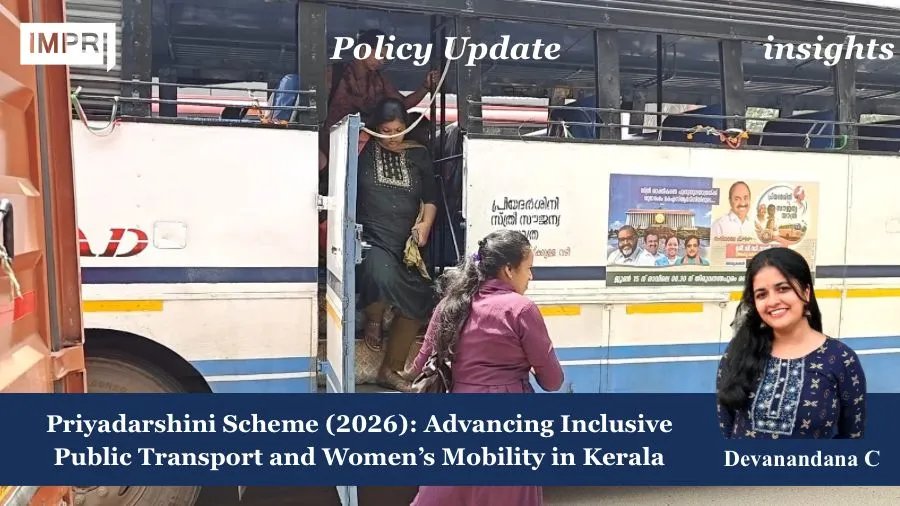
A large number of KSRTC buses have been running under the scheme since its introduction and there is a noticeable increase in the number of passengers. The high level of usage indicates that the scheme is fulfilling a genuine need for affordable public transport, particularly for women and transgender people who rely on buses for their daily commute.
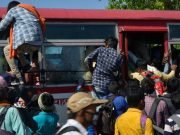
A high level of bus occupancy on the buses covered by the scheme is one of the clearest indicators of its popularity. Many of these buses can be seen with large numbers of passengers, especially during peak hours. This is an indication that people are not only treating this as a benefit that exists on paper but are actually availing the free travel facility. The elimination of daily travel costs can make a significant difference to the monthly expenditure of regular commuters, which may account for the strong response to the scheme.
The growth in bus usage also indicates that public transport remains an important part of Kerala’s daily life. The scheme offers an opportunity to students, working women and others who travel frequently to travel without worrying about the cost of each journey. In this way, the scheme has enabled KSRTC buses to be more accessible to a section of the population who would have otherwise had to curtail their travel due to transport costs.
Simultaneously with positive feedback on KSRTC’s offer, some adverse reactions arose concerning the negative aspects of the offer, mainly overcrowding and KSRTC service problems. Consequently, with many buses filled to capacity and unable to provide the required comfort, citizens’ satisfaction is at risk. Moreover, there are concerns about the financial sustainability of the scheme and the KSRTC’s service capacity.
Nevertheless, despite negative feedback, public transport users’ interest in the offer is growing. The growing demand for 100% free bus travel strongly indicates its need in society. The main challenge for KSRTC is to meet the demand for free bus services while maintaining a high level of comfort for passengers and financial sustainability.
Impact
The Priyadarshini Scheme offers immense value to women and transgender persons considering their day to day travel needs where they have to spend money on buses. It will enable them to save money which they could utilize on other personal needs and have a better quality of life.
The scheme will also help in making them more mobile and give them more options as far as travelling is concerned. More women will get access to public transport which in turn will motivate them to pursue jobs, education and other activities which they would not have thought of due to the high costs of commuting.
The scheme will also lead to a permanent switch from private cars to public transport. The high number of commuters that have subscribed to the scheme is a good indication of how many people are dependent on bus travel and how much they will benefit from a scheme that subsidizes their travel needs.
It is also a positive indication for the future, particularly as women constitute the majority of beneficiaries using the card. Having given them free transportation will motivate them to interact more with the outside world. The fact that the government has decided to include transgendered persons also speaks volumes about the benefits they will gain from the initiative.
Emerging Issues
While the Priyadarshini Scheme has gained immense popularity among the general people, there are some associated challenges that have come into the limelight. One of the most prominent concerns has been the overcrowding of KSRTC buses following the launch of the free travel scheme. In other words, the number of passengers grew exponentially after the program started and many buses are regularly fully occupied, especially during peak hours. Indeed, this outcome appears to be entirely positive as it demonstrates the satisfaction of the people and the efficient use of the scheme. However, on the other hand, such popularity may have adverse implications for the transportation system and how bus rides are experienced by the passengers.
As expected, the KSRTC free travel scheme has also generated some negative public opinion. In particular, some commuters have voiced their concerns about the loss of comfort that arises from the increased number of people on buses. While the fact that the scheme does not appear to be perfect is undisputable, it is challenging to say whether these drawbacks are significant enough to consider the initiative flawed. Indeed, the popularity of the offer suggests that more people are inclined to take a bus than before, which is a leapfrog for the system. Nevertheless, the above-mentioned considerations should be taken into account by the government when addressing the rising demand for free transportation.
Perhaps, one of the most critical concerns related to the KSRTC free travel scheme is the question of financial sustainability. Since the passengers who are eligible to use the promotion have the right to do so, the government should reimburse the compensation to KSRTC for the lost revenue. Furthermore, the organization should also be capable of supporting the augmented number of passengers with its current bus fleet to avoid incurring additional expenses. Additionally, if the demand grows significantly, the government may have to consider adding more buses to the road to satisfy the unmet need. Indeed, as the popularity of the scheme grows, the above-mentioned sustainability issues may become pressing and require public attention.
Way Forward
The high utilization rate of the Priyadarshini Scheme indicates the need for an economical public transport system. At the same time, the growing demand suggests that the authorities should think of providing more convenient modes of travel for citizens. Increasing the number of buses and services on popular routes or during rush hours could be an option to prevent overcrowding and further improve the scheme’s efficiency.
Furthermore, the negative public opinion on the scheme should not be seen as a problem but an issue that requires the government’s attention. It could be possible if the authorities address the travelers’ demands and analyze the most popular routes. The feedback can help the administration understand the increased need for buses on specific routes and make appropriate improvements.
Equally important, the government should take into account the financial sustainability of the KSRTC. Buses under the scheme stop being compensated for free rides, which means that the administration should reimburse the transport company for losses. One way to achieve it is to provide a constant flow of compensation based on the number of KSRTC buses under the scheme.
In general, the government needs to operate on the number of passengers, congestion, route-wise requirements, and service quality. Upgrading the bus services, adding more vehicles on popular routes, and improving maintenance and cleanliness could be an option. Moreover, the government needs to monitor and analyze changes in the demand for transportations. A growing number of passengers means that the authorities should think of adding more buses or routes under the scheme.
Overall the Priyadarshini Scheme has been a great initiative towards making public transport more accessible and affordable for women and transgender persons in Kerala. Removing the burden of fares for ordinary KSRTC buses has made a noticeable difference for many frequent KSRTC bus commuters and commuters in general. It has been a great hit among the people and the overflowing buses are a testimony to that fact.
However, the popularity of the scheme has had some adverse effects like overcrowding, putting undue burden on KSRTC and questions regarding the financial viability of the scheme. However, these challenges should be looked at as areas of improvement rather than deterrents to implementing such a great scheme.
As such, the government should focus on strengthening the transport system and the finances of KSRTC to ensure that it can cope with the demands of the Priyadarshini Scheme commuters as well as ensuring that the scheme’s benefits are not undermined due to its inability to support the sheer volume of its passengers.
In this regard, it can be stated that the future of the Priyadarshini Scheme depends largely on the government’s ability to balance transport accessibility, passenger comfort, service viability and financial viability of the scheme while also taking into account the KSRTC’s capacity to provide efficient service to the commuters. This can be achieved through more efficient route management, providing extra services on bus routes with heavy ridership, compensating KSRTC for its services and monitoring.
As such, the importance of the Priyadarshini Scheme goes far beyond merely providing free rides for women and transgender persons as it can have a great impact on their overall well-being as well as catalyse their empowerment in numerous spheres of life. If the future challenges of the Priyadarshini Scheme are successfully navigated, then it has the potential to become a model for Kerala in many ways.
References
Government of Kerala. (2026, June 11). KSRTC ordinary buses: Free travel for women and transgender persons. Kerala Government Official Web Portal. https://kerala.gov.in/whatsnewdetailwise/MTcwMTUyODQ1Mi4zNg%3D%3D
Kerala Government. (2026). Priyadarshini free travel for socio-economic development of women. Kerala Data Portal. https://datahub.kerala.gov.in/sector/transport?highlight=938
The Economic Times. (2026, June 10). Kerala to offer free bus travel for women from June 15 at Rs 800 crore yearly cost. https://m.economictimes.com/news/india/kerala-to-offer-free-bus-travel-for-women-from-june-15-at-rs-800-crore-yearly-cost/articleshow/131627985.cms
The New Indian Express. (2026, June 13). Kerala CM to launch free KSRTC bus travel scheme for women, transgenders on June 15. https://www.newindianexpress.com/amp/story/states/kerala/2026/Jun/13/kerala-cm-to-launch-free-ksrtc-bus-travel-scheme-for-women-transgenders-on-june-15
The Times of India. (2026, June 18). Kerala HC reserves order on PIL against free KSRTC bus travel for women. https://timesofindia.indiatimes.com/city/kochi/kerala-hc-reserves-order-on-pil-against-free-ksrtc-bus-travel-for-women/articleshow/131835894.cms
About the Contributor:
Devanandana is an International Relations student at Loyola College, Chennai, who has completed a Bachelor’s degree in French Literature. Interested in researching gender trends and impacts in international relations.
Acknowledgement:
The author extends sincere thanks to the IMPRI team for their guidance. The author also extends sincere thanks to Kavin Adithya and for their constructive reviews and editorial support.
Disclaimer:
All views expressed in the article belong solely to the author and not necessarily to the organisation.
Read more at IMPRI:
Protecting the Aravallis: Forest Conservation Amendment Act, 2023 Vs Sustainable Mining Plans
Sustainable Development Goals and Women’s Development: Building an Inclusive and Equal Future