






Viren Naik
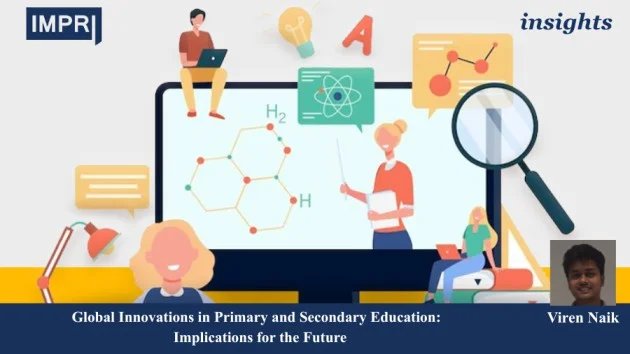
Education is still the foundation of social progress, but traditional methods that rely on memorization, standardized testing, and rigid systems are no longer enough for today’s challenges. Countries with top education systems are trying new approaches that focus on real-world learning, teamwork, creativity, student choice, and adaptive technology. By looking at these global innovations, we can find ways to boost academic results and help students gain the skills they need to succeed in a fast-changing world. A major change in education worldwide is the rise of project-based learning (PBL), where students tackle real problems and create results that combine knowledge from different subjects.
In Finland, known for its strong education system, project-based learning is a key part of teaching. It helps students become more independent, creative, and collaborative instead of just memorising facts. Finnish schools encourage students to work on long-term projects that require critical thinking and real-life skills, leading to better engagement and resilience. These methods have been linked to better academic results and improved social skills, such as teamwork and communication, benefits also seen in countries like Finland and Australia.
Singapore’s education system similarly incorporates project‑based learning to prepare students for future challenges in global and technological contexts. Rather than relying solely on test results, Singaporean schools implement PBL within frameworks such as the “Future Ready” curriculum, motivating students to engage with complex issues such as sustainability, poverty, and urban growth through interdisciplinary projects. This shift reinforces reasoning skills and pliability, key competencies for the developing digital economy.
Beyond project‑based learning, educational innovators are exploring ways to recognise a range of skills and competencies beyond traditional exam performance. One prominent trend is micro‑credentialing, in which students earn digital badges or certificates for mastery of specific skills such as critical thinking, teamwork, and digital skills. These credentials allow learners to showcase their competencies in a detailed portfolio rather than a single score from a standardised exam. Policies supporting micro‑credentials are expanding in countries such as Canada, where statutory education authorities coordinate efforts to create flexible, learner‑centric credential frameworks that match workforce needs and lifelong learning priorities.
A closely related innovation includes the use of dynamic learning systems that personalise instruction based on students’ strengths, progress, and learning styles. Adaptive systems adapt the difficulty of learning tasks in real time, helping students master concepts at their own pace and get tailored support where needed. In developed countries like the United States and Japan, adaptive learning platforms are integrated into classrooms to enhance focus and understanding, with data-based insights informing teaching strategies and curriculum refinement.
While technology is helpful, it should support, not replace, the human side of teaching. For example, inquiry-based teaching encourages students to ask questions, work with classmates, and improve how they learn, with teachers guiding them. Projects like the Stanford Mobile Inquiry-based Learning Environment (SMILE) highlight this change by getting students to create and review their own questions, which helps them think more deeply instead of just receiving information.
Another innovative model that has attracted attention worldwide is the Self‑Organised Learning Environment (SOLE), developed by educator Sugata Mitra. SOLE enables students to work in small groups with minimal direct instruction, using the internet to collaboratively explore and answer complex questions. This approach supports self‑directed learning and peer‑supported knowledge building, specifically in environments where formal resources are limited.
Integrating worldwide collaboration into learning experiences additionally enhances intercultural competencies and communication skills. Programs in Europe, such as eTwinning, connect classrooms across countries for joint projects that involve synchronous and asynchronous collaboration, helping students communicate with peers from varied linguistic and cultural backgrounds whilst co‑creating knowledge and learning 21st‑century skills.
Educational innovation is not limited to pedagogy and technology. Some countries encourage student leadership and agency within the school environment itself. For example, student participation in governance, decision-making, and community problem-solving builds responsibility, negotiation skills, and civic engagement—competencies that traditional hierarchical learning structures often overlook. These practices demonstrate a broader educational trend toward learner agency, which international policy schemes highlight as essential for future workforce readiness plus societal contribution.
Real‑world community impact is another way school’s bridge classroom learning with public relevance. In places across Africa and Latin America, students are guided to work on local issues—such as environmental conservation, water management, or digital literacy—that require them to apply academic knowledge in meaningful contexts. These experiential learning experiences build empathy, civic awareness, and innovative problem‑solving, supporting the idea that education should not be divorced from the communities it serves.
Despite the diversity of innovations, there are common principles that support their success: they shift learning from memorisation to meaning, encourage student agency and collective work, and align educational activities with realistic challenges. Project‑based and inquiry‑oriented learning allow students to engage intensely with content, improve critical thinking, and build resilience. Adaptive technologies and micro‑credentials provide personalised pathways and recognition for different competencies. Meanwhile, collaborative global exchanges and social impact projects foster empathy, cultural awareness, and civic responsibility among learners.
In conclusion, global innovations in primary and secondary education illustrate that preparing students for an uncertain future requires going beyond orthodox approaches. Countries leading within education are experimenting with project‑based learning, adaptive technologies, micro‑credentialing, self‑directed inquiry, and community participation to nurture capable, curious, and socially responsible learners. By utilising such innovative, student-centred, and context‑driven strategies, education systems can evolve into platforms that not only impart knowledge but also empower students to lead, innovate, and adapt in a complex, interdependent world.
References:
Inquiry and project‑based learning improve academic and social outcomes in Finland and other systems.https://www.frontiersin.org/journals/education/articles/10.3389/feduc.2025.1512274/full
Implementation rates and outcomes of inquiry‑based learning in primary education.https://www.frontiersin.org/journals/education/articles/10.3389/feduc.2025.1512274/full
Project‑based learning adoption in Finland and Singapore.https://www.linkedin.com/pulse/future-education-how-countries-embracing-learning-pbl-rauf-q20uf
Global collaborative models like eTwinning promote intercultural and communicative competence. https://en.wikipedia.org/wiki/Virtual_exchange
Adaptive learning and AI’s role in tailoring educational experiences.https://rsisinternational.org/journals/ijriss/articles/transforming-education-with-ai-insights-from-developed-countries
Mobile inquiry‑based learning environments (SMILE) encourage student question generation and active learning.https://en.wikipedia.org/wiki/Stanford_Mobile_Inquiry-based_Learning_Environment
Self‑Organised Learning Environments (SOLE) facilitate self‑directed collaborative student learning.https://en.wikipedia.org/wiki/Self_Organised_Learning_Environment
About the Contributor: Viren Naik is a BSc Maths graduate and a UPSC aspirant. He is a fellow of the Public Policy Youth Fellowship .
Disclaimer: All views expressed in the article belong solely to the author and not necessarily to the organisation.
Read more at IMPRI:
Beyond the Summit: Bridging the Gap Between Policy and Funding
Acknowledgement: This article was posted by Anish Pujapanda, a Research and Editorial Intern at IMPRI.